
Freight & Supply Chain Blog
Expert perspectives on global freight forwarding, air export strategies, ocean freight trends, and B2B fulfillment solutions.
Smart Fulfillment Guides
Practical advice on optimizing inventory, cross-docking operations, and streamlining Chicago ORD airport logistics.
Global Shipping Updates
Stay informed on ISF filing requirements, NVOCC ocean consolidation, and international cargo tracking standards.
Top Warehouse Cross-Docking Services for Global Buyers?
Table of Contents
Global buyers rarely choose a cross-docking provider for speed alone. They need reliable handoffs, clear shipment visibility, and schedules that match incoming and outbound freight. A late container, an unreadable pallet label, or a missed carrier cutoff can leave goods waiting on the dock. The promise is simple. Execution is not.
The scale of logistics makes those details matter. CSCMP’s 2024 State of Logistics Report estimated U.S. business logistics costs at $2.3 trillion in 2023, or 8.7% of GDP. MHI and Deloitte’s 2024 Annual Industry Report found that 55% of surveyed supply chain professionals planned to increase investment in supply chain innovation. These reports do not prove that cross-docking suits every shipment. They do show why buyers are examining faster, better-coordinated operations. Warehouse Cross-Docking Services can reduce storage time when receiving, sorting, and dispatch are carefully aligned. But a transfer through a warehouse is not automatically efficient. Poor data, uneven volumes, or limited dock capacity can simply move delays elsewhere. A real pallet tells the story: arrival scan, destination sort, outbound staging, and a confirmed departure window. Each handoff needs ownership.
This guide examines providers and capabilities relevant to global buyers, including network reach, shipment tracking, facility coordination, and handling procedures. It also considers practical trade-offs, not just advertised transit speeds. No single provider fits every lane or freight profile. Buyers should verify service coverage and performance directly, because published capabilities may not reflect every location. The comparison is a starting point, not a guarantee.
What Cross-Docking Means in Global Warehousing
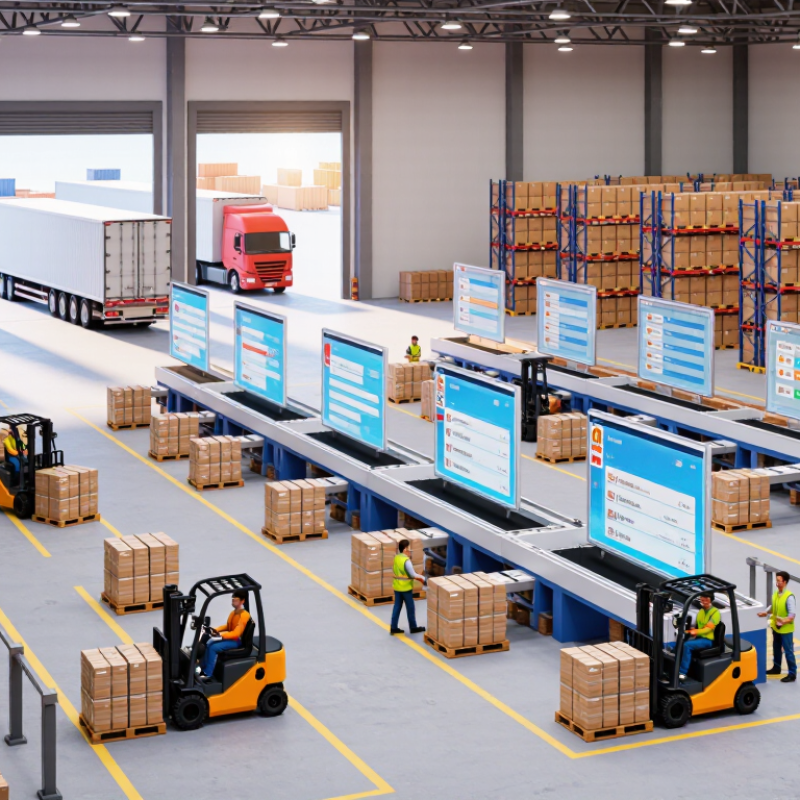
Cross-docking is a warehouse process that moves goods from inbound transport to outbound transport with little or no long-term storage. In global shipping, a container may arrive at a distribution facility after required clearance and release steps. Staff unload cartons, scan labels, sort items by destination, and stage them for the next truck or scheduled shipment. The warehouse acts as a transfer point, not a place to keep inventory for weeks.
A typical transfer depends on timing and accurate information. For example, cartons arriving in the morning might be matched to regional orders and loaded onto separate pallets by afternoon. This can reduce storage time and handling, but it leaves little room for errors. A late truck, unclear labels, or mismatched quantities can disrupt the plan. Cross-docking is not a magic shortcut; some shipments need inspection, extra handling, or temporary storage. In practice, the fit is not always obvious.
Tips: Share shipment details and arrival estimates early. Use clear carton labels and confirm quantities before dispatch. Ask how the warehouse handles delays and damaged goods. Small process gaps matter. A quick transfer can become a bottleneck when schedules change.
How Goods Move Through a Cross-Docking Facility
At a cross-docking facility, inbound freight is unloaded, checked against advance shipment notices, and scanned by item or pallet. Staff sort each load by destination, route, or delivery window. A carton bound for a nearby store may move straight to an outbound lane; another may wait briefly on a marked pallet. Little is stored. Timing matters.
Before trucks arrive, teams match orders with dock doors and loading plans. Scans confirm where each unit goes, while supervisors resolve shortages or damaged packaging before dispatch. The 2024 MHI Annual Industry Report, produced with Deloitte, found that 55% of surveyed supply-chain leaders planned to increase technology investment. Better visibility can help coordinate scans and schedules, but software cannot make a late truck arrive on time. In practice, one misplaced pallet can disrupt a carefully planned door schedule. That is a useful reminder: cross-docking depends on people, accurate data, and realistic timing—not speed alone.
Tips: Label destination lanes clearly, scan at transfer points, and keep exception freight separate. Check staffing and dock capacity against arrival patterns. Small delays happen; build in room to respond.
Core Services Offered by Cross-Docking Providers
Cross-docking moves inbound goods directly toward outbound orders, with little or no long-term storage. Providers receive pallets or cartons, scan shipment details, and check labels against purchase orders. Timing matters. A late truck can disrupt several departures.
At the dock, teams sort freight by destination, combine compatible orders, or split bulk shipments into smaller loads. They may relabel cartons, build route-specific pallets, and stage freight beside assigned outbound doors. Many also coordinate carriers, schedule appointments, and share shipment status through warehouse software. Ask how exceptions are recorded: a damaged carton or mismatched label needs a clear owner, not just another scan.
Visibility and execution matter because handoffs can add cost and delay. The Council of Supply Chain Management Professionals reported that U.S. business logistics costs reached $2.3 trillion, or 8.7% of GDP, in 2023. That figure is not a cross-docking savings estimate, but it shows the scale of logistics spending. Providers can offer inventory updates and proof of dispatch, yet data feeds may lag behind activity on the dock. A polished dashboard cannot replace a worker checking the pallet tag. Buyers should confirm service hours, cut-off times, handling procedures, and how missed connections are reported. A neat process map can still hide messy dock reality.
How Global Buyers Can Compare Cross-Docking Services
Global buyers should compare cross-docking services by the work they perform, not just the quoted handling rate. Some facilities only transfer sealed pallets; others sort cartons, consolidate orders, or apply new labels. Ask what happens when a shipment arrives late or its paperwork does not match the booking. A clear exception process matters. Small details matter.
Check operating hours, appointment rules, daily cut-off times, and the distance between the facility and your next transport connection. Request sample performance data for receiving accuracy, dispatch timing, and damage reporting. Make sure each metric has a clear definition and covers a period that includes busy weeks. A polished dashboard can still hide uneven results, so ask how missed targets are recorded. If possible, review a sample shipment timeline from arrival scan to outbound release.
Tips: Share a realistic shipment profile before requesting prices, including pallet count, carton mix, expected arrival pattern, and destination schedule. Compare all fees, including storage caused by delays and special handling. Ask who provides status updates and how quickly exceptions are reported. Then test the process with a small shipment. One trial will not prove everything, but it can reveal gaps in communication.
Top Warehouse Cross-Docking Services for Global Buyers? — How Global Buyers Can Compare Cross-Docking Services
| Service Model | Best Suited For | Typical Inbound and Outbound Flow | Indicative Dock-to-Dock Window | Handling Requirements | What Buyers Should Compare |
|---|---|---|---|---|---|
| Direct or pallet cross-docking | Full-pallet shipments with known destinations and little or no storage requirement. | Inbound pallets are checked, sorted by destination, and moved to outbound staging or trailers. | Same day to about 24 hours, depending on schedules and receiving cut-off times. | Dock doors, pallet-handling equipment, advance shipment details, and accurate destination labels. | Receiving accuracy, appointment availability, pallet exchange rules, cut-off times, and proof-of-transfer records. |
| Retail and store-order sortation | Mixed shipments that must be divided into store-specific or delivery-route-specific orders. | Cases or pallets arrive in bulk, are sorted by store or route, and are consolidated for dispatch. | Same day to 48 hours; longer windows may be needed for high-volume or complex sortation. | Clear store-level data, scan-capable processes, suitable staging space, and reliable labeling. | Sort accuracy, supported label formats, order cut-off times, peak-season capacity, and handling of exceptions. |
| Consolidation and deconsolidation | Buyers combining smaller shipments or separating larger inbound loads for multiple destinations. | Freight from several inbound shipments is grouped into outbound loads, or a large load is split into smaller deliveries. | About 1–3 days is a practical planning range; timing depends on cargo arrival and load-building schedules. | Shipment-level identification, cargo visibility, compatible handling units, and coordinated carrier schedules. | Minimum handling charges, consolidation frequency, cargo traceability, shipment matching, and responsibility for shortages or damage. |
| Container transload cross-docking | Importers moving cargo from ocean containers into domestic trailers, trucks, or other transport units. | Containers are unloaded, freight is checked and sorted as needed, then transferred to outbound equipment. | Same day to 48 hours after container availability; port, appointment, and drayage delays can extend the total timeline. | Container unloading capability, labor and equipment planning, cargo condition checks, and coordination with drayage providers. | Container appointment coordination, unloading and detention terms, free-time assumptions, damage documentation, and outbound capacity. |
| Temperature-controlled cross-docking | Products that must remain within specified chilled, frozen, or otherwise controlled temperature ranges. | Inbound temperature-controlled freight is received, transferred through an appropriate environment, and dispatched promptly. | Usually planned for same-day transfer; actual limits depend on product requirements and facility procedures. | Suitable temperature zones, calibrated monitoring devices, recorded checks, and documented handling procedures. | Available temperature ranges, monitoring and excursion records, transfer procedures, emergency plans, and product-specific requirements. |
| Time-critical or expedited cross-docking | Urgent replenishment, production inputs, or freight with tightly coordinated onward transport. | Inbound freight is prioritized for rapid identification, staging, and transfer to a pre-arranged outbound carrier. | Several hours may be achievable when arrivals, labor, and outbound transport are coordinated in advance. | Pre-booked dock appointments, advance shipment data, dedicated staging, and escalation contacts. | Operating hours, after-hours availability, response times, service-level terms, contingency capacity, and surcharge structure. |
Comparison note: Cross-docking transfers freight between inbound and outbound transport with limited storage; it does not by itself provide customs clearance. International buyers should separately confirm importer-of-record responsibilities, customs documentation, security requirements, insurance, and applicable product-handling regulations. Actual dwell times and capabilities vary by facility, shipment profile, carrier schedules, and local regulations.
Key Factors in Selecting an International Cross-Docking Partner
Selecting an international cross-docking partner requires more than comparing warehouse rates. A facility near major ports, airports, or freight corridors can reduce transfer time, but location alone is not enough. Ask how the provider manages receiving appointments, shipment cutoffs, and unexpected delays. Clear answers matter.
Check operational visibility before signing. Can your team see arrival times, scan events, discrepancies, and dispatch status? Ask for sample reports and clarify how quickly the provider flags damaged cartons or count mismatches. Confirm staff capacity during seasonal peaks, too. A polished service promise means little if loading bays are full. It is worth checking references and service metrics, although one imperfect trial shipment may reveal issues a presentation will not.
Tips: Test one lane before expanding. Share realistic volumes and label formats. Agree on escalation contacts, reporting frequency, and backup plans in writing. Keep expectations practical; cross-docking can shorten handling time, but it cannot remove every delay.
FAQS
Compare sorting, carton consolidation, relabeling, and pallet transfer services. Check extra fees, too.
Check its distance from ports, airports, freight corridors, and your next transport connection. A nearby site may still have slow appointment rules.
Ask about opening hours, receiving appointments, daily cut-off times, and late-arrival procedures. Small details matter.
Request receiving accuracy, dispatch timing, and damage reports. Ask how each metric is defined and whether busy weeks are included.
Request sample reports showing arrival scans, discrepancies, and dispatch status. Confirm how quickly staff report damaged cartons or count mismatches.
Provide pallet counts, carton mix, arrival patterns, label formats, and destination schedules. Realistic details help make quotes more comparable.
Start with one lane and a small shipment. Review the timeline from arrival scan to outbound release. One trial is not proof.
Agree on contacts, reporting frequency, and backup plans in writing. Ask what happens when paperwork differs from the booking. Not always obvious.
Conclusion
Warehouse Cross-Docking Services help global buyers move goods through a warehouse with minimal storage time. Instead of placing every shipment into long-term inventory, a facility receives incoming freight, checks and sorts it, then transfers it to an outbound shipment. This approach can support faster distribution, reduce unnecessary handling, and coordinate goods from multiple suppliers for delivery to different destinations.
A cross-docking provider may offer receiving, inspection, labeling, consolidation, shipment coordination, and inventory visibility. When comparing services, buyers should consider facility locations, handling capacity, transit schedules, communication systems, service flexibility, and the provider’s experience with international supply chains. The right partner should match the buyer’s product flow and delivery needs, explain its processes clearly, and provide reliable coordination from arrival through dispatch.

Blog Tags: