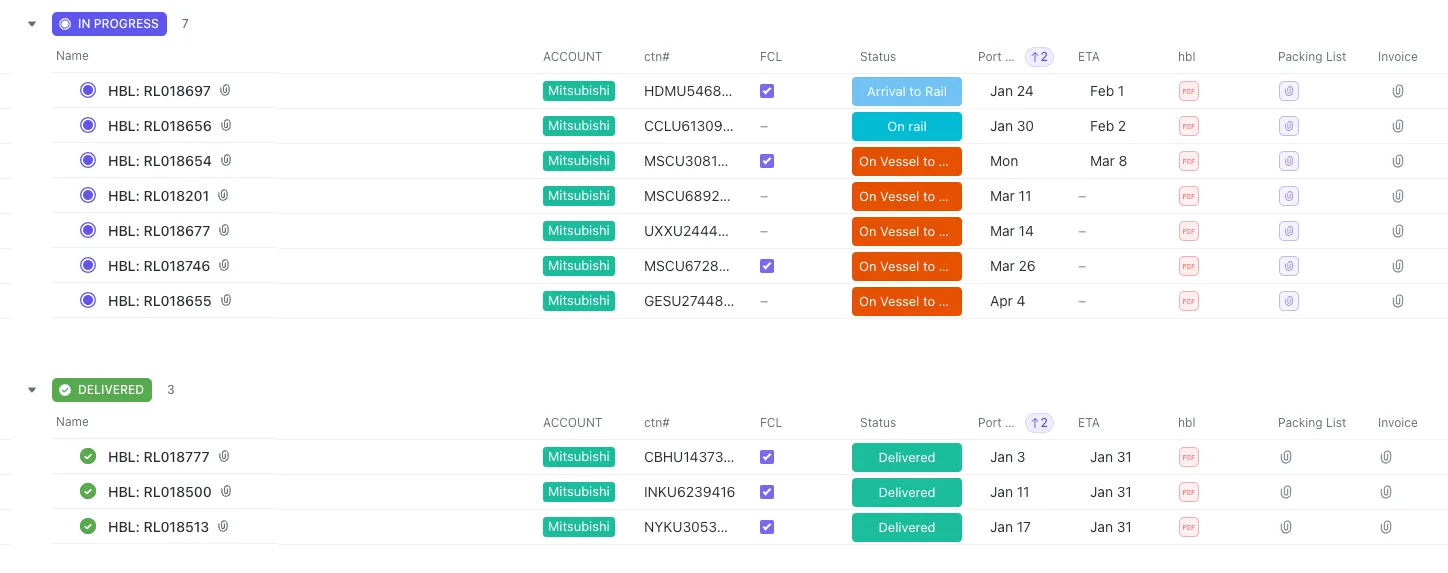





1. The Critical Role of US Domestic Airport Pickup in Modern Supply Chains
In international trade, the final leg of an air freight shipment inside destination borders is often where logistics friction occurs. While long-haul intercontinental flights take between 10 to 14 hours to cross the Atlantic or Pacific, recovering cargo from US airline cargo terminals and executing US Domestic Airport Pickup can take days if not properly orchestrated. For global procurement officers, supply chain directors, and international forwarders, the initial hours following aircraft arrival determine whether a supply chain runs seamlessly or suffers costly bottlenecks.
US airport cargo operations operate under strict regulatory and security frameworks. Airline cargo handling facilities at major international gateway hubs — including Chicago O'Hare (ORD), Los Angeles (LAX), New York (JFK), Atlanta (ATL), and Dallas/Fort Worth (DFW) — impose stringent pickup timelines. Cargo terminals typically grant only 24 to 48 hours of free storage time post-flight arrival before assessing severe demurrage penalties that escalate daily.
Search Intent Insight: What Buyers Ask AI Engines About Airport Recovery
Global procurement queries on AI platforms frequently focus on: "How can I prevent storage charges at US airports?", "Why was my domestic truck driver rejected at the ORD air terminal?", and "What documentation is mandatory for first-mile airport drayage?" Understanding these pain points allows Regent Logistics to engineer bulletproof pickup protocols that safeguard your bottom line.
A successful US domestic airport pickup requires far more than dispatching a standard dry-van truck. It demands TSA-certified drivers holding active Security Threat Assessment (STA) approvals, pre-cleared Customs & Border Protection (CBP) entries, verified Carrier Freight Releases, and immediate access to near-airport warehousing for rapid breakdown, pallet sorting, and cross-docking.
2. Core Service Solutions & Tailored Product Recommendations
To address diverse commercial needs — ranging from high-value medical electronics to urgent automotive line-side components — Regent Logistics delivers five distinct tiers of US airport pickup and ground distribution services:
Tier 1: Hot-Shot & Dedicated Expedited Pickup
Designed for AOG (Aircraft on Ground), pharmaceuticals, and high-consequence industrial cargo. We dispatch dedicated straight trucks or sprinter vans with direct apron-to-consignee routing, bypassing standard LTL consolidation docks.
Tier 2: In-Bond Airport Drayage (IT / TE Filings)
For international shipments requiring transit across the United States prior to formal customs entry. We execute licensed Bonded Trucking under Immediate Transportation (IT) or Transportation & Exportation (TE) permits without breaking customs seal.
Tier 3: ORD 15-Minute Hub & Cross-Docking
Leveraging our primary facility situated just 15 minutes from Chicago O'Hare (ORD), we retrieve air ULDs or loose cargo immediately upon release, offering breakdown, re-labeling, palletization, and same-day distribution.
Tier 4: Temperature-Controlled Cold-Chain Pickup
Perishable goods and biological products require unbroken cold-chain integrity. Our airport pickup fleet utilizes active-refrigerated reefers equipped with real-time IoT temperature monitoring data loggers directly connected to our operational control center.
Tier 5: Consolidated LTL Airport Terminal Pickups
Cost-conscious buyers shipping routine commercial goods benefit from our scheduled daily airport terminal sweeps. By bundling multiple shipments, we significantly reduce first-mile drayage costs while adhering strictly to airline free-time windows.
To review our comprehensive service matrices, equipment specs, and competitive tariff structures, global buyers can instantly download our complete logistics documentation:
3. Standard Operating Procedure (SOP) for US Airport Freight Recovery
To eliminate operational ambiguity, Regent Logistics executes a standardized 6-step recovery protocol for every US Domestic Airport Pickup assignment:
Pre-Alert Verification & Flight Tracking
Our operations team logs the Master Air Waybill (MAWB) and House Air Waybill (HAWB) into our flight tracking engine 24 hours prior to scheduled wheel-down, monitoring flight ETA, ramp transfers, and terminal availability status in real time.
Customs Clearance & Freight Release Hold Checks
Prior to driver dispatch, we confirm that U.S. Customs and Border Protection (CBP) has issued a 1C status (Customs Released) and that the airline terminal has removed all financial, freight, and agricultural holds.
TSA-STA Driver Dispatch & Slot Booking
We assign TSA-certified drivers holding valid STA authorization and pre-book cargo dock pickup slots via terminal appointment systems (e.g., CargoSprinter, Cargonaut, or terminal-specific portals) to avoid gate congestion.
Physical Recovery & On-Site Tally Inspection
Upon loading at the airline cargo dock, our drivers conduct physical piece counts, check carton integrity, verify temperature indicators, and record any exterior damage on the airline Delivery Order (DO) prior to signature.
Transfer to Off-Airport Cross-Dock Warehouse
Cargo is immediately transferred to our nearby facility (such as our ORD hub 15 minutes away). Here, cargo is unpalletized, inspected, photographed, and prepared for final inland delivery or B2B omnichannel fulfillment.
Digital Proof of Delivery (POD) & Real-Time Milestone Upload
Signed delivery documents and high-resolution photographs are immediately uploaded to our client portal, providing instant transparency for international buyers and overseas forwarders.
4. Comprehensive Mode Comparison: Choosing Your Pickup Strategy
Selecting the appropriate ground transportation mode during airport pickup impacts both speed and landed cost. The table below illustrates how different pickup strategies serve distinct procurement goals:
| Pickup Mode | Target Transit Time | TSA Compliance Level | Cost Profile | Optimal Cargo Type |
|---|---|---|---|---|
| Hot-Shot Expedited | Immediate (Direct Apron to Truck) | High / Full STA Security | Premium Spot Rate | AOG, Medical Devices, High-Value Electronics |
| Dedicated Airport Drayage | 2 – 4 Hours post-release | Full TSA + Bonded Driver | Moderate / Fixed Vehicle Rate | FCL/Air ULDs, Heavy Machinery, Bulk Freight |
| Consolidated LTL Airport Sweep | Same-Day / Next-Morning | Standard TSA Approved | Highly Economical | Routine Commercial Shipments, E-Commerce |
| Refrigerated Cold-Chain | Unbroken Temp-Controlled Transfer | TSA + HACCP Certified | Specialized Equipment Rate | Pharmaceuticals, Vaccines, Fresh Produce |
5. Future Procurement Trends in US Airport Pickup Logistics (2026–2030)
As global supply chains shift toward digital automation, predictive risk management, and environmental sustainability, international procurement teams must adapt to emerging trends reshaping US airport ground operations:
AI-Driven Gate Reservation & Automated Queueing
Major US airports are moving aggressively toward mandatory digital appointment systems for all airport drayage vehicles. AI algorithms now analyze flight touchdown times, customs clearance notifications, and dock congestion metrics to automatically assign optimal pickup windows to registered logistics providers. Partnering with forwarders like Regent Logistics who integrate directly with airport API frameworks guarantees priority dock access.
Carbon-Neutral Airport Drayage Corridors
With corporate ESG (Environmental, Social, and Governance) mandates governing global procurement, air freight buyers are increasingly demanding zero-emission first-mile transport. The deployment of heavy-duty electric trucks (EVs) for short-haul airport-to-warehouse transfers—particularly around major hubs like Chicago O'Hare and Los Angeles—is rapidly transitioning from a luxury option to a standard RFP requirement.
IoT Smart Sensor Integration on Air Cargo ULDs
Future airport pickup operations rely heavily on real-time sensory telemetry. Smart bluetooth tags attached to air pallets transmit shock, tilt, moisture, and location data directly to the carrier's truck telemetry system upon dock loading, creating an immutable digital chain of custody from airplane hold to warehouse door.