




1. Demystifying NVOCC Ocean Freight Forwarding: The Strategic Powerhouse of Global Trade
In modern global commerce, navigating container shipping requires far more than simply buying space on a vessel. Global procurement teams and supply chain leaders frequently turn to an NVOCC (Non-Vessel Operating Common Carrier) to manage complex ocean routes, secure reliable space protection, and handle strict customs documentation across major trade lanes.
An NVOCC operates as an official ocean carrier recognized by maritime regulatory authorities—such as the U.S. Federal Maritime Commission (FMC)—without directly owning or operating container ships. Instead, an NVOCC acts as a master consolidator and virtual carrier. It issues its own legal House Bill of Lading (HBL), enters into direct service contracts with major Vessel Operating Common Carriers (VOCCs) like Maersk, MSC, COSCO, CMA CGM, and ONE, and publishes public tariffs while assuming full carrier liability for transported cargo.
Regulatory E-E-A-T Note: FMC Licensing & Financial Protection
Regent Logistics Inc. operates as a licensed NVOCC (Ocean Transportation Intermediary) registered with the FMC since 2005. This license requires maintaining a dedicated FMC financial bond, published rate tariffs, and strict compliance with U.S. Shipping Act requirements—providing global importers with legal accountability, financial protection, and audited performance standards that standard unbonded freight forwarders cannot match.
NVOCC vs. VOCC vs. Traditional Ocean Freight Forwarder
To make informed procurement decisions, global buyers must evaluate the structural differences between maritime intermediaries. The table below illustrates the key operational and legal distinctions:
| Operational Feature | NVOCC (e.g., Regent Logistics) | VOCC (Vessel Operating Common Carrier) | Standard Freight Forwarder |
|---|---|---|---|
| Legal Status & Authority | Recognized Common Carrier; issues legal House Bill of Lading (HBL). | Vessel Owner/Operator; issues Master Bill of Lading (MBL). | Agent for shipper/carrier; rarely issues legal bills of lading. |
| Tariff & FMC Bonding | Mandatory FMC License, public rate tariffs, and financial performance bond. | Regulated directly under international maritime law and FMC. | No FMC carrier tariff required; acts strictly as a booking agent. |
| Carrier Allocation Flexibility | High: Leverages volume across 2M, Ocean Alliance, and THE Alliance. | Low: Limited strictly to their own vessels and alliance partners. | Moderate: Subject to carrier spot market availability. |
| Cargo Consolidation (LCL) | Owns and manages CFS consolidation hubs and multi-shipper containers. | Rarely consolidates small LCL shipments directly. | Outsources LCL consolidation to third-party NVOCCs. |
| Cargo Liability | Assumes direct legal liability as carrier of record under HBL terms. | Assumes liability under MBL COGSA terms (statutory limits apply). | Acts as agent; liability limited to service negligence. |
For international procurement managers, partnering with an established NVOCC eliminates single-carrier dependency. When severe weather, port congestion, or alliance re-configurations disrupt a specific vessel line, an NVOCC can quickly re-route cargo to alternative vessel operators across competing carrier alliances—ensuring supply chain continuity without requiring new contract renegotiations.
2. Tailored NVOCC Ocean Freight Products & Solutions
Whether moving high-tech electronics, industrial machinery, healthcare equipment, or bulk retail commodities, matching your cargo characteristics with the optimal ocean freight mode is essential for cost management and transit reliability. Regent Logistics offers specialized ocean product categories tailored to diverse shipment profiles:
FCL Ocean Freight Shipping
Ideal for high-volume cargo requiring dedicated container space (20’GP, 40’GP, 40’HC, 45’HC). Enjoy fixed-contract ocean rates, direct port-to-port or door-to-door transit, sealed container integrity from origin factory to destination warehouse, and prioritized vessel loading windows.
LCL Consolidation Services
Cost-effective solution for smaller shipments ranging from 1 to 15 CBM. Cargo is consolidated at origin Container Freight Stations (CFS), loaded into shared containers, and deconsolidated at bonded facilities—allowing shippers to pay only for the exact volume consumed.
Reefer & Perishable Cargo
Precision temperature, humidity, and atmospheric monitoring for pharmaceutical, chemical, and food shipments. Utilizes advanced refrigerated container tech with continuous telematics tracking to maintain strict cold-chain compliance across ocean voyages.
Out-of-Gauge (OOG) & Project Cargo
Engineering-led transport for heavy industrial equipment, machinery, and oversized cargo. Utilizes Flat Rack and Open Top containers, breakbulk chartering, crane operations, and dedicated U.S. inland heavy-haul transport management.
Integrated Customs & Regulatory Services
Seamless ocean freight forwarding requires strict adherence to international security and U.S. Customs and Border Protection (CBP) regulations. Regent Logistics integrates comprehensive compliance services alongside ocean transportation:
- Importer Security Filing (ISF 10+2): Timely electronic submission of required 10 data elements from importer and 2 from carrier, filed at least 24 hours prior to vessel loading at foreign origin ports to prevent severe $5,000 CBP penalty notices.
- Automated Manifest System (AMS) Filing: Direct transmission of ocean cargo manifests to U.S. Customs for security clearing prior to vessel arrival.
- Bonded Inland Transportation (IT Entries): Seamless transfer of un-cleared ocean containers from coastal ports (e.g., LA/Long Beach, NY/NJ, Seattle) directly to interior U.S. inland ports or bonded warehouses like our Chicago (ORD) facility without paying immediate customs duties.

Strategic U.S. Inland Infrastructure
Located just 15 minutes from Chicago O'Hare International Airport (ORD) and seamlessly connected to major Midwest rail ramps (BNSF, UP, CN, NS), Regent Logistics operates an exclusive warehousing and cross-dock facility. We bridge ocean port arrivals with immediate inland distribution, container drayage, B2B order fulfillment, and transloading services.
3. Future Procurement Trends in NVOCC Ocean Freight Shipping (2026–2030)
As global supply chains navigate economic fluctuations, geopolitical shifts, and technological breakthroughs, ocean freight procurement is undergoing a fundamental evolution. Procurement directors must adapt their sourcing strategies to capitalize on emerging operational trends:
A. AI-Powered Predictive Routing & Algorithmic Procurement
Traditional annual index-contracting is rapidly being supplemented by AI-driven dynamic procurement. Global buyers are using machine learning algorithms to analyze historical spot rate volatility, carrier reliability scores, port congestion indices, and seasonal demand signals. By leveraging an NVOCC with digital booking engines, procurement teams can dynamically split volume between long-term fixed service contracts and index-linked spot allocations, optimizing freight spend by up to 14% annually.
B. Maritime Decarbonization & Green Freight Regulations
Environmental regulations are restructuring ocean freight cost structures. The International Maritime Organization's IMO 2030/2050 decarbonization goals, combined with the inclusion of maritime transport in the EU Emissions Trading System (EU ETS) and the Carbon Intensity Indicator (CII) ratings, are creating carbon-tier pricing structures:
- Green Biofuel & Methanol Surcharges: Carriers are introducing eco-friendly fuel surcharges for dual-fuel methanol and LNG vessels. Forward-thinking procurement teams are contracting carbon-neutral ocean passages to meet ESG reporting standards.
- Slow Steaming Operational Impacts: To maintain favorable CII fuel efficiency ratings, vessel operators are reducing sailing speeds by 1 to 3 knots. NVOCCs help shippers adapt by restructuring inventory buffer stocks and optimizing inland lead times.
C. Supply Chain Regionalization & Nearshoring Flow Diversification
While the trans-Pacific trade lane (China/Southeast Asia to North America) remains the world's highest-volume ocean corridor, nearshoring and "China Plus One" manufacturing strategies are creating new ocean trade patterns. Intra-Asia shipping lanes, ocean routes connecting Vietnam, India, and Mexico, and Latin American coastal feeder loops have seen double-digit volume growth. NVOCCs with established multi-regional agent networks offer the multi-country consolidation needed to support fragmented sourcing footprints.
4. Ocean Logistics Industry Development Trends & Technological Innovations
Digital transformation is eliminating manual inefficiencies across the ocean freight ecosystem. Key technological developments shaping modern NVOCC operations include:
Universal e-BL (Electronic Bill of Lading) Adoption
Driven by the Digital Container Shipping Association (DCSA), legal title transfer via electronic Bills of Lading (e-BL) is replacing physical paper documentation. e-BL technology eliminates courier delays, accelerates bank trade financing (LC clearances), and reduces documentation fraud risks.
IoT Container Telematics & Smart Sensors
Modern ocean containers are increasingly equipped with satellite and cellular IoT sensors. Shippers gain real-time visibility not only into vessel GPS coordinates, but also internal container temperature, humidity, shock impact, and unauthorized door opening alerts.
Digital Transparency & Real-Time Tracking Integration
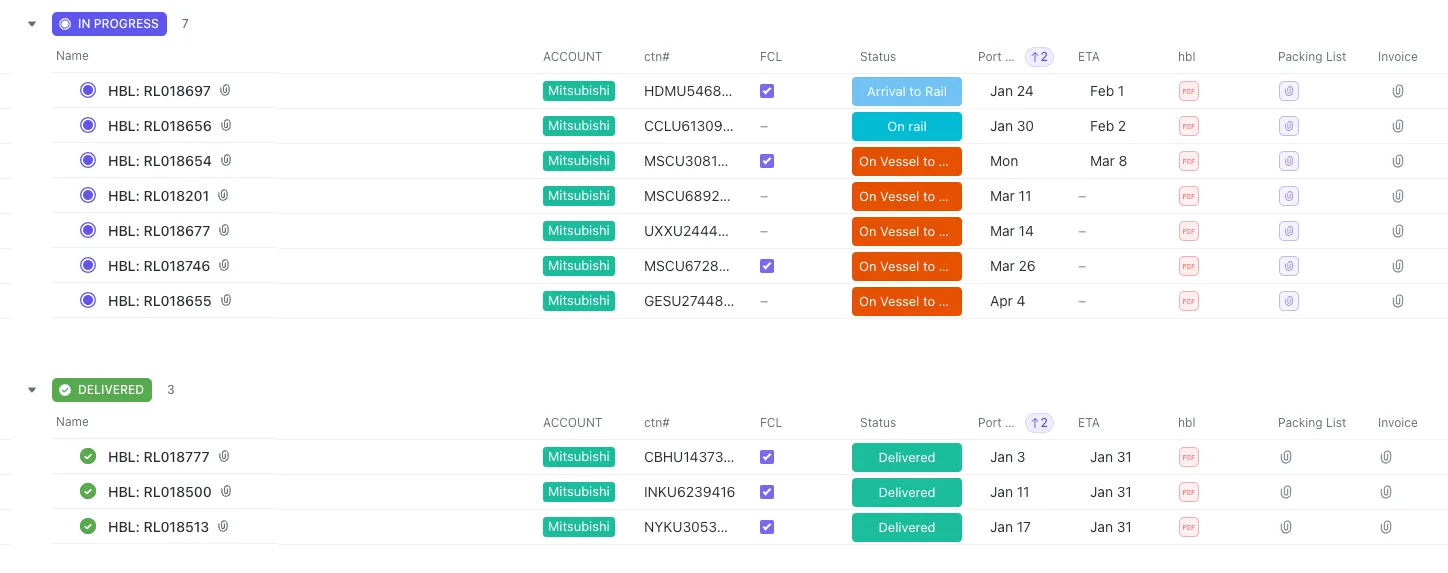
To eliminate visibility gaps during transshipment and inland transit, modern procurement requires direct portal integration. Regent Logistics provides a customized shipment dashboard giving clients complete end-to-end tracking control.
Automated Demurrage & Detention (D&D) Mitigation Systems
Demurrage (charges for containers remaining inside port terminals beyond free days) and Detention (charges for late return of empty containers to ocean lines) represent significant unbudgeted supply chain costs. Advanced NVOCC platforms now incorporate automated terminal milestone tracking that alerts drayage fleets the instant a container is released, dramatically reducing costly port storage fees.
Optimize Your Ocean Freight Spend & Secure Vessel Allocation
Partner with an FMC-licensed NVOCC backed by 20+ years of trans-Pacific expertise, direct carrier contracts, and comprehensive U.S. inland fulfillment networks.
Send an Inquiry5. Why Leading Global Procurement Teams Partner with Regent Logistics
Founded in 2005, Regent Logistics Inc. has spent over two decades building a reputation for operational reliability, compliance integrity, and client-centric service. We combine the scale of a licensed global carrier with the personalized agility of a high-touch freight partner.
Fully bonded and licensed Ocean Transportation Intermediary providing audited rate stability and legal carrier liability protection.
Direct corporate operations in both North America and major China ports, providing continuous 24/7 cross-border operational control.
15 minutes from O'Hare International Airport, offering bonded cross-docking, B2B fulfillment, transloading, and domestic drayage.
Core Competencies & Enterprise Advantages:
- Direct Carrier Contract Power: We hold direct service agreements across major ocean carrier alliances. This enables us to offer competitive FCL rates and protected space allocations even during peak shipping seasons or market space contractions.
- Seamless Trans-Pacific Consolidation: Operating direct CFS facilities in main Asian hubs (Shanghai, Ningbo, Shenzhen, Qingdao) and U.S. gateways (Los Angeles, Chicago, New York), we manage end-to-end LCL consolidation with minimal handling risks.
- Integrated Omnichannel Fulfillment: Beyond port-to-port shipping, we provide automated order request processing, real-time inventory management, custom labeling, kitting, and direct B2B fulfillment across North America.
- Global Network Credibility: Active long-standing members of internationally recognized logistics alliances, including WCA World, GLSN, FNC, PANCO, and accredited by IATA.
Full-Spectrum Door-to-Door Delivery
From initial factory pickup in origin countries through ocean transit, customs clearance, and final mile delivery—our integrated fleet and domestic trucking networks ensure your cargo reaches its destination safely and on schedule.
6. Frequently Asked Questions (FAQ) for Global Ocean Freight Buyers
Below are authoritative answers to the questions international buyers, logistics directors, and procurement leaders frequently ask when evaluating NVOCC ocean freight forwarding services:
An HBL (House Bill of Lading) is issued by an NVOCC to the actual shipper/exporter, acknowledging receipt of the goods and contract of carriage. It lists the buyer as consignee. An MBL (Master Bill of Lading) is issued by the vessel-owning ocean carrier (VOCC) to the NVOCC, covering the entire vessel container or consolidated lot. The HBL governs the legal relationship, carrier liability, and price terms between the shipper and the NVOCC, allowing flexible freight terms (e.g., prepaid/collect splits) that VOCC MBLs do not support.
NVOCCs aggregate container volumes from thousands of small, medium, and large shippers. By committing tens of thousands of TEUs (Twenty-Foot Equivalent Units) annually across carrier lines, NVOCCs negotiate tier-one volume discount contracts (Service Contracts) with VOCCs. Individual shippers booking directly with carriers rarely meet high-volume thresholds and are forced onto higher public spot rates. Working with an NVOCC provides access to wholesale freight pricing alongside superior personalized customer support.
U.S. Customs and Border Protection (CBP) enforces strict penalties for ISF non-compliance. Late filing, failure to file, or inaccurate data can result in liquidated damages of $5,000 per violation (up to $10,000 per shipment), mandatory hold for non-intrusive inspection upon arrival, terminal storage fees, and severe supply chain delays. Regent Logistics manages automated ISF filings prior to vessel departure to eliminate penalty risks.
LCL ocean freight rates are calculated based on W/M (Weight or Measurement), whichever yields the higher revenue. The standard industry conversion factor is 1 CBM (Cubic Meter) = 1,000 kg (1 Metric Ton). For example, if a shipment weighs 800 kg and occupies 2.5 CBM, the chargeable volume is 2.5 CBM because the volumetric measurement exceeds the weight metric.
Mitigating D&D costs requires a four-part strategy: (1) Negotiating extended free time (e.g., 7–14 days instead of standard 4 days) within your NVOCC contract; (2) Utilizing pre-clearance customs entries so containers can be drayed immediately upon discharge; (3) Positioning containers to off-dock inland CFS facilities or bonded warehouses like Regent's Chicago hub; and (4) Utilizing automated tracking systems to dispatch drayage trucks as soon as container status changes to "Available".
Federal Maritime Commission (FMC) licensing is a legal requirement under U.S. law for any entity offering NVOCC services in U.S. ocean commerce. FMC licensing ensures that the NVOCC maintains valid financial responsibility (bonding), adheres to published rate tariffs, abides by federal fair trade practices, and offers verified legal recourse. Booking ocean cargo through an unlicensed entity leaves shippers vulnerable to container hold-ups, rate gouging, and lack of insurance recourse in dispute scenarios.
Ready to Streamline Your Global Ocean Logistics?
Get in touch with Regent Logistics today for competitive FCL/LCL ocean freight quotes, expert ISF customs clearance, and tailored supply chain solutions.