
Featured Cross-Border Freight & Last-Mile Solutions
Explore our specialized door-to-door, DDP, ocean consolidation, and express air freight services tailored for global B2B enterprises and e-commerce leaders.
1. The Strategic Architecture of China Last-Mile Delivery & Freight Logistics
In the contemporary global trade paradigm, the phrase "Last-Mile Delivery" has evolved from a simple logistics terminus into the single most decisive factor governing supply chain profitability, customer satisfaction, and brand equity. As China solidifies its position as the world's primary manufacturing powerhouse, global enterprise buyers, retail conglomerates, and e-commerce merchants are confronted with unprecedented complexity. Navigating the intricate bridge between China’s industrial manufacturing epicenters—such as Shenzhen, Guangzhou, Ningbo, Shanghai, and Qingdao—and final distribution points across North America and Europe requires far more than basic booking services. It demands a fully integrated, semantically synchronized end-to-end logistics ecosystem.
The traditional freight forwarding model relied on fragmented handoffs: factory pickup by local drayage, ocean transit managed by vessel operators, customs clearance by third-party brokers, and eventual de-consolidation by regional warehouses before hand-off to local parcel carriers. Each handoff introduced systemic friction, extended lead times, opaque billing structures, and elevated risk of damage or demurrage. Modern procurement leaders now mandate holistic, single-source accountability through licensed Non-Vessel Operating Common Carriers (NVOCC) and accredited IATA cargo agents who own or directly manage the end-to-end corridor—from first-mile origin loading to final last-mile doorstep placement.
Strategic Takeaway: Information Gain in cross-border logistics is achieved when real-time telemetry, automated customs processing, and dedicated regional warehousing collapse the friction of international transport. Partnering with a dual-established operator in both China and the U.S. eliminates operational blindness during final-mile dispatch.
The Mechanics of Integrated Door-to-Door DDP (Delivered Duty Paid)
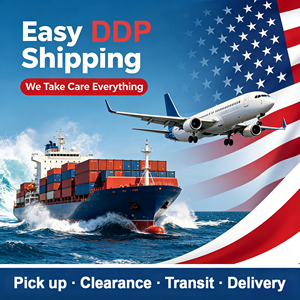
Delivered Duty Paid (DDP) logistics represents the apex of procurement convenience for global buyers. Under DDP terms, the freight forwarder assumes full financial and operational responsibility for the cargo until it reaches the final designated delivery site. This includes export clearance at Chinese ports, international maritime or air transit, Importer Security Filing (ISF 10+2) compliance, U.S. Customs and Border Protection (CBP) entries, payment of applicable tariffs and Section 301 duties, harbor maintenance fees, and final-mile drayage or parcel dispatch.
Executing high-volume DDP services requires robust legal accreditation and local operational infrastructure. By leveraging FMC-licensed NVOCC status and deep bonded warehouse networks, logistics providers eliminate third-party markup fees while ensuring that commercial invoices and Harmonized Tariff Schedule (HTS) codes are meticulously audited prior to vessel departure, preventing costly customs holds at destination ports like Los Angeles, Long Beach, New York, or Chicago.
First-Mile Hub Consolidation
Strategic origin consolidation hubs in Shenzhen, Ningbo, and Shanghai collect cargo from diverse manufacturers, optimizing container space via LCL to reduce ocean freight expenses.
Automated Customs Pre-Clearance
Real-time ISF filings and automated entry submissions ensure cargo receives customs clearance prior to vessel berthing, minimizing port dwell times.
Proximity Airport & Port Hubs
Facilities positioned within 15 minutes of major gateways like ORD Airport (Elk Grove Village, IL) provide rapid cross-docking and immediate last-mile dispatch.
2. Corporate Infrastructure & Global Operational Competency
Building on more than two decades of global logistics excellence since 2005, Regent Logistics Inc. stands as a benchmark of operational integrity and authority within the international freight ecosystem. Holding licenses as an FMC-licensed NVOCC and IATA-accredited freight forwarder, Regent Logistics bridges the vital trade lanes connecting Asian manufacturing networks directly into North American commerce networks.
With fully operational offices and logistics hubs strategically located in both North America and mainland China, Regent Logistics maintains an unbroken chain of custody over every shipment. The organization's flagship Midwest distribution hub in Elk Grove Village, Illinois—situated merely 15 minutes from Chicago O'Hare International Airport (ORD)—serves as a vital nerve center for air freight exports, import cross-docking, B2B omnichannel fulfillment, and rapid Midwest truckload distribution.
Global Logistics Network Alliances
Authority in modern logistics is established through certified network partnerships. Regent Logistics actively participates in elite global freight alliances, ensuring verified operational standards and financial protection across 150+ countries:
WCA World (World Cargo Alliance)
Partnered with the world’s largest network of independent freight forwarders, providing audited service quality and global door-to-door coverage.
PANCO & GLSN Accreditation
Certified membership in specialized logistics alliances guarantees dedicated container capacity and priority vessel allocations during peak shipping seasons.
IATA Carrier Direct Contracts
Direct allocations with tier-one international airlines grant preferential air cargo charter rates, block space agreements (BSA), and accelerated uplift capabilities.
Omnichannel B2B Fulfillment & ORD Warehouse Infrastructure
Modern B2B importers require warehousing facilities that act as dynamic fulfillment hubs rather than passive storage spaces. The Regent ORD airport facility is equipped with real-time Warehouse Management Systems (WMS), automated picking algorithms, custom labeling/kitting capabilities, drop-shipping processing, and flexible EDI integration with global e-commerce platforms and Amazon SPN (Service Provider Network) standards.
3. Quantitative Comparison of Cross-Border Shipping Modes
Selecting the optimal logistics corridor requires evaluating trade-offs between transit velocity, cost structure, and last-mile flexibility. The analytical matrix below illustrates performance metrics across primary China-to-US transport vectors:
| Transport Mode | Avg. Transit Time | Cost Index ($/kg) | Customs Handling | Last-Mile Flexibility | Best Suited For |
|---|---|---|---|---|---|
| Direct Air Express | 3 - 5 Days | High ($6.50 - $9.50) | Express Clearance | Parcel / Courier Drop | High-Value Electronics, Samples |
| DDP Air Freight + Truck | 7 - 10 Days | Moderate ($4.00 - $6.00) | Bonded Bulk Entry | Liftgate Trucking / LTL | Time-Sensitive B2B Inventory |
| Fast Ocean (FCL) + Express Dray | 14 - 18 Days | Low ($1.20 - $2.20) | ISF 10+2 Pre-Filing | Direct Container Delivery | High Volume Machinery & Goods |
| DDP Ocean LCL Consolidation | 20 - 26 Days | Lowest ($0.50 - $1.10) | Consolidated Clearance | Palletized Warehouse Drop | Standard E-Commerce Stock |
4. Future Sourcing & Last-Mile Delivery Trends (2026-2030)
As global supply chains undergo rapid structural shifts, key macro trends are fundamentally altering how freight service manufacturers and exporters in China interface with western markets:
Hyper-Localized Micro-Fulfillment & Cross-Docking Velocity
The reliance on massive, centralized inland distribution centers is decreasing in favor of strategic perimeter micro-warehouses situated within close proximity to major airport hubs and maritime ports. By cross-docking imported ocean containers directly into regional parcel networks within hours of port discharge, forward-thinking enterprises cut 3 to 5 days off final delivery timelines while curbing domestic long-haul drayage surcharges.
Digitized Visibility & Predictive Milestone Telemetry
Opaque tracking numbers are obsolete. Advanced logistics consumers require 24/7 web-based portal access that synthesizes AIS vessel tracking, flight status updates, GPS truck telemetry, and automated EDI milestones into a unified graphical dashboard. This digital transparency empowers inventory managers to dynamically reroute shipments, schedule labor shifts for unloading, and provide end-customers with exact delivery ETA windows.
Green Last-Mile Fleets & Decarbonization Pressures
Environmental, Social, and Governance (ESG) mandates are rapidly trickling down from corporate boardrooms to logistics procurement contracts. Buyers are actively prioritizing logistics partners who employ electric vehicle (EV) fleets for urban last-mile deliveries, optimize container payload ratios to minimize carbon intensity per cubic meter, and utilize eco-friendly packaging materials during warehouse re-kitting operations.
5. Frequently Asked Questions (FAQ)
Critical operational answers curated by our senior logistics compliance team to resolve common procurement challenges when sourcing freight services from China.
What does DDP (Delivered Duty Paid) service cover from China to the USA?
DDP is a comprehensive freight solution where the forwarder handles origin pickup in China, export documentation, international sea or air transport, US Customs brokerage, tariff and Section 301 duty payments, and final last-mile delivery directly to your designated warehouse, commercial address, or Amazon FBA center without hidden surcharges.
Why is Importer Security Filing (ISF 10+2) crucial for ocean shipments?
ISF filing must be submitted to U.S. Customs and Border Protection at least 24 hours prior to cargo loading at the Chinese port of origin. Failure or delay in accurate filing results in mandatory $5,000 CBP fines per violation, cargo holds, and severe port storage penalties. Regent Logistics automates ISF processing to eliminate non-compliance risks.
How does proximity to ORD Airport enhance last-mile delivery efficiency?
Operating a primary logistics facility in Elk Grove Village, IL—just 15 minutes from Chicago O'Hare International Airport (ORD)—allows immediate cargo retrieval from airport cargo hubs upon flight arrival, enabling same-day cross-docking, sorting, and rapid last-mile truck dispatch across the US Midwest.
What is the difference between FCL and LCL sea freight shipping?
FCL (Full Container Load) dedicates an entire 20ft, 40ft, or 40ft High Cube container to a single shipper, providing maximum security and speed. LCL (Less than Container Load) consolidates goods from multiple shippers into one container, offering a cost-effective alternative for smaller cargo volumes.
Can Regent Logistics handle specialized Amazon FBA inbound freight?
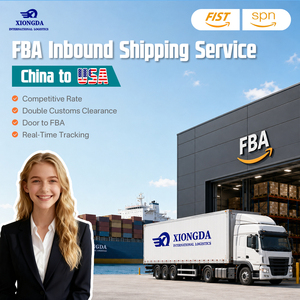
Yes. As an experienced partner with deep expertise in Amazon SPN guidelines, we provide complete Amazon FBA logistics—including strict palletization standards, FBA carton labeling, appointment scheduling via CARP, and compliant DDP delivery to all Amazon fulfillment hubs across North America and Europe.
How are second-hand and SOC containers utilized in ocean freight?
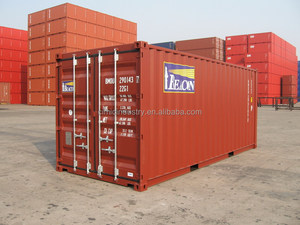
Shipper Owned Containers (SOC) and certified second-hand 20ft/40ft ISO containers offer exporters structural flexibility for one-way transport or remote storage projects. All containers supplied through our China port networks carry valid CSC safety approvals for international ocean transit.
What measures prevent last-mile delivery delays during peak seasons?
Peak season resilience is achieved through guaranteed block space agreements (BSA) with major ocean alliances and airlines, pre-booking local port drayage chassis, and utilizing dedicated off-dock container yards to bypass terminal congestion at destination ports.
How can I monitor the real-time status of my international shipment?
All clients gain access to Regent’s 24/7 digital tracking portal, providing real-time visibility over ocean vessel AIS locations, flight telemetry, customs release milestones, and final-mile delivery confirmation proofs.
Ready to Streamline Your China-to-Global Last-Mile Supply Chain?
Connect directly with our licensed NVOCC and IATA logistics specialists for custom rate quotes, route optimization, and immediate door-to-door freight dispatch.
Get a Quote