1. Comprehensive Procurement Guide for China Ocean Container Booking
In the contemporary global supply chain ecosystem, selecting the optimal ocean container line booking supplier in China is no longer merely an operational procurement task; it is a core strategic lever determining gross margin, inventory velocity, and market competitiveness. Navigating the complex maritime landscape—characterized by alliance shifts, port congestion, volatile General Rate Increases (GRI), and strict decarbonization mandates—requires an in-depth understanding of ocean freight dynamics.
Carrier Direct Contracts vs. Licensed NVOCC Freight Forwarders
Importers and global procurement directors often face the strategic dilemma of whether to negotiate BCO (Beneficial Cargo Owner) service contracts directly with ocean lines (e.g., COSCO, Maersk, MSC) or partner with a licensed NVOCC (Non-Vessel Operating Common Carrier) like Regent Logistics Inc. While direct carrier contracts appear attractive for high-volume shippers moving over 1,000 TEUs annually, they lack flexibility during market dislocations. Ocean carriers enforce strict minimum quantity commitments (MQC) and offer minimal customer service for origin consolidation, drayage coordination, or customs exceptions.
Conversely, working with an established NVOCC supplier provides aggregated buying power. By pooling volume across hundreds of enterprise accounts, Regent Logistics secures Tier-1 contract rates across all major ocean alliances (2M, Ocean Alliance, THE Alliance / Gemini Cooperation), providing shippers with dual advantages: competitive spot/contract pricing and multi-carrier redundancy to prevent rolled containers during peak shipping quarters.
Key Procurement Takeaway: Partnering with a dual-headquartered US-China NVOCC eliminates single-carrier reliance, guarantees peak-season vessel allocations, and integrates origin warehousing with destination customs clearance.
Container Equipment Specifications & Selection Criteria
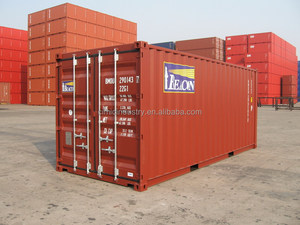
Maximizing cube utilization is critical to lowering your freight cost per unit. Below is an executive technical comparison of standardized ISO ocean shipping containers deployed across transpacific and global trade lanes:
| Container Type |
Internal Volume (CBM) |
Max Payload Weight (KG) |
Optimal Cargo Profile |
Strategic Advantage |
| 20ft Standard (20GP) |
~33.2 CBM |
21,800 KG |
Heavy, dense cargo (Minerals, Liquids, Machinery) |
Lower port handling fees; weight-limited cargo optimization. |
| 40ft Standard (40GP) |
~67.7 CBM |
26,600 KG |
General manufactured goods, textiles, consumer goods |
Standardized bulk volume shipping across major rail & road networks. |
| 40ft High Cube (40HC) |
~76.4 CBM |
26,580 KG |
Volumetric goods, furniture, electronics, apparel |
Most cost-effective CBM ratio for transpacific retail cargo. |
| 45ft High Cube (45HC) |
~86.0 CBM |
27,600 KG |
Lightweight high-cube e-commerce & Amazon FBA cargo |
Maximum volume capacity; minimizes per-unit ocean freight tariff. |
2. Transpacific & Global Shipping Lane Performance Analysis
Logistics managers evaluating ocean container booking options from China must tailor their routing strategies to destination port infrastructure, inland intermodal rail availability, and total landside transit times. Regent Logistics manages optimized vessel schedules across key global trade lanes:
China to US West Coast (USWC: LAX/LGB/OAK/SEA)
Transpacific West Coast routes offer the shortest ocean transit time (12 to 16 port-to-port days from Shenzhen/Shanghai to Los Angeles/Long Beach). For time-sensitive retail launches and fast-turnaround e-commerce restocking, expedited premium ocean services (such as Matson CLX/CCX or EXX lines) deliver near-air freight speed at a fraction of the cost. Regent Logistics coordinates immediate offdock drayage and wheel-mounted container pickup to bypass marine terminal congestion.
China to US East Coast (USEC: NYC/SAV/CHS/HOU) via Panama / Suez
All-water ocean services to US East Coast and Gulf ports (transit times ranging from 24 to 32 days) serve as a strategic alternative to overland intermodal rail (IPI). Shippers moving heavy industrial equipment or bulk merchandise directly to East Coast distribution centers utilize USEC bookings to mitigate US West Coast rail bottlenecks and chassis shortages.
China to Europe & Mediterranean (ROT/HAM/FEL/BLG)
Ocean container lines operating between Asia and Northern Europe require strict compliance with EU customs regulations (ICS2) and environmental ETS carbon taxation. Regent Logistics secures vessel space equipped with low-carbon LNG or green methanol propulsion, ensuring compliance while optimizing freight tariffs for EU importers.
3. Strategic Imperatives: Customs Brokerage, ISF 10+2 & Door-to-Door DDP
Ocean container line booking is only one component of a successful import operation. Flawless execution requires integrated customs clearance and door-to-door drayage logistics.
Importer Security Filing (ISF 10+2) Compliance
Under U.S. Customs and Border Protection (CBP) regulations, Importer Security Filing (ISF) must be submitted at least 24 hours prior to cargo loading at the origin port in China. Failure to submit accurate ISF data (including manufacturer name, seller, buyer, importer of record, and container stuffing location) results in automatic $5,000 CBP penalty fines per violation, along with mandatory customs holds upon vessel arrival. Regent Logistics' automated ABI filing system guarantees 100% compliant, error-free ISF processing.
DDP (Delivered Duty Paid) vs. FOB Shipping Terms
While traditional B2B procurement relied heavily on FOB (Free on Board) origin terms, modern enterprise supply chains increasingly adopt DDP (Delivered Duty Paid). Under DDP terms, Regent Logistics assumes complete end-to-end responsibility: origin factory pickup in China, export customs clearance, ocean container freight booking, US Customs clearance, HTS code tariff classification, duty/tax payment, and final mile drayage to distribution warehouses or Amazon FBA fulfillment centers.