
Core Sea Freight & Container Export Portfolio
Select from our specialized ocean freight categories optimized for high-volume transpacific and global trade lanes, complete with customs clearance, warehousing, and door-to-door delivery.
 FCL / LCL
Door to Door Ocean Sea Freight FCL LCL Container Shipping Forwarder Agent From Shenzhen China to USA
 Air & Sea DDP
Cheapest Air Sea DDP LCL International Logistics Service Top 10 China to USA UK Canada Express Shipping Agent
 Multi-Country
Shipping From China to USA Germany Italy Sea Freight Forwarder DDP Shipping Agent Amazon FBA Logistics & Used Containers
 LCL + Trucking
International LCL+Trucking Logistics Shipping Agent Door To Door Freight Forwarder China To AU/USA/EU/CA Sea Freight
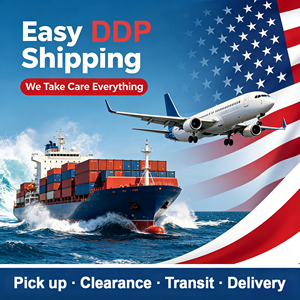 16-25 Days US
DDP Container Freight Forwarder Logistics Services FCL Sea Cargo Shipping Agent for LCL+Express US Destinations 16-25 Days
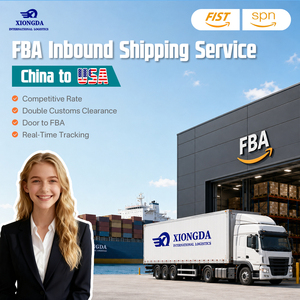 Amazon SPN
Amazon SPN Partner Fast FCL LCL Sea General Cargo From China To USA FBA Inbound Shipping Agent With Customs Clearance
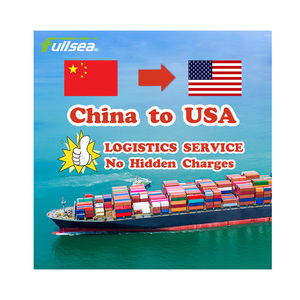 15-20 Days Fast
Cheapest Sea Shipping FCL LCL Container Freight Forwarding Direct Service 15-20 Days to USA Main Ports
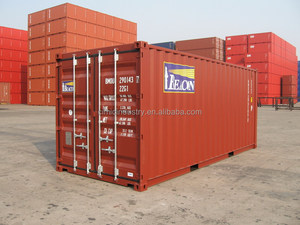 SOC & Equipment
20ft Shipping Container Price Second Hand Containers Sea Shipping Containers At Each Major Port In China
Enterprise Capabilities & Global Logistics Architecture
Combining Federal Maritime Commission (FMC) compliance with strategic physical assets across China export hubs and U.S. gateway ports.
Licensed NVOCC & FMC Bonding
As a fully credentialed Non-Vessel Operating Common Carrier (NVOCC) since 2005, Regent Logistics issues proprietary Bills of Lading, negotiates direct service contracts with top ocean alliances (2M, Ocean Alliance, THE Alliance), and provides complete regulatory protection under FMC tariffs.
Strategically Positioned ORD Hub
Our flagship 345 Crossen Ave facility in Elk Grove Village, IL sits just 15 minutes from Chicago O'Hare International Airport (ORD). Featuring extensive cross-docking bays, high-density pallet storage, automated e-commerce pick-and-pack, and bonded staging for rapid midwest distribution.
Global Network Credentials
Certified member of World Cargo Alliance (WCA), PANCO, GLSN, and FNC networks. Coupled with IATA accreditation, our global reach connects major China export ports (Shenzhen, Ningbo, Shanghai, Qingdao) seamlessly with North American, European, and Australian entry ports.
Macro Trends Shaping Global Sea Freight & Container Procurement
Essential market insights for supply chain directors, procurement officers, and international trade buyers navigating post-pandemic maritime dynamics.
Strategic Supply Chain Shift: Transpacific Resiliency & Decoupling Mitigation
The global shipping landscape is transitioning from "Just-in-Time" to "Just-in-Case" inventory strategies. As maritime environmental mandates take full effect and geopolitical trade tariffs remain volatile, enterprise buyers are prioritizing contract flexibility, real-time IoT visibility, and multi-modal contingency routing over raw spot-rate minimization.
Ocean Freight Mode Selection Matrix (2025 Standard)
| Freight Metric | Less than Container Load (LCL) | Full Container Load (20ft FCL) | Full Container Load (40ft HQ) |
|---|---|---|---|
| Volumetric Capacity | 1 CBM – 15 CBM | 28 CBM – 33 CBM | 68 CBM – 76 CBM |
| Cost Optimization Threshold | Best for < 13 CBM shipments | Break-even vs LCL at ~14-15 CBM | Lowest unit transport cost for > 35 CBM |
| Customs Risk Profile | Shared container exam risk | Isolated single-importer clearance | Isolated single-importer clearance |
| Origin Consolidation Time | +2 to 4 Days (CFS Loading) | Direct Factory Loading (0 Days) | Direct Factory Loading (0 Days) |
| Demurrage Liability | Low (Handled at CFS level) | High (Daily port storage fees) | High (Daily port storage fees) |
1. Regulatory Environmental Compliance (IMO 2023 & EU ETS)
The International Maritime Organization's Carbon Intensity Indicator (CII) and Energy Efficiency Existing Ship Index (EEXI) have forced ocean carriers to implement slow-steaming protocols. Furthermore, the inclusion of maritime transport in the EU Emissions Trading System (EU ETS) adds variable carbon surcharges. Strategic buyers must account for potential 2-3 day transit extensions on long-haul routes as vessels optimize engine loads to comply with carbon caps.
2. Digitalization & Real-Time Container Telematics
Legacy milestone tracking (e.g., "Vessel Departed") is rapidly being superseded by smart-container IoT sensors. Regent Logistics integrates automated telematics to provide continuous monitoring of internal container temperature, humidity, shock events, and precise GPS location. Modern supply chains leverage these automated data streams to trigger customs ISF filings and schedule drayage trucks dynamically, eliminating costly port detention fees.
Future Procurement Trends in China Container Export (2025–2030)
Growth of All-Inclusive DDP Architecture
B2B buyers and e-commerce sellers are increasingly abandoning traditional FOB terms in favor of Delivered Duty Paid (DDP). DDP eliminates localized administrative overhead by transferring responsibility for customs clearance, tariff classification, bond procurement, and final mile chassis drayage to an integrated master forwarder.
Second-Hand SOC Container Procurement
Due to ocean container maldistribution, acquiring Shipper-Owned Containers (SOC) graded as Cargo Worthy (CW) or IICL-5 has become a crucial risk-mitigation strategy. Importers utilize SOC containers for static storage, remote job site logistics, and escaping carrier box-demurrage charges during port congestion spikes.
Omnichannel Airport/Seaport Cross-Docking
Rather than shipping goods directly to end-user retail stores or Amazon FBA fulfillment centers, leading importers route ocean containers through regional hub warehouses (such as Regent's Chicago ORD facility). Goods are unpalletized, re-labeled, sorted, and dispatched via domestic truckload (TL) or less-than-truckload (LTL) based on real-time order demand.
Frequently Asked Questions (FAQ) on China Sea Freight & Container Export
Detailed technical answers to common queries regarding maritime logistics, customs compliance, and container sourcing from China factories.
Q1 How do I determine whether to choose FCL or LCL for my shipping container export from China?
The decision between Full Container Load (FCL) and Less than Container Load (LCL) depends primarily on total cargo volume, weight, and urgency. As a general industry rule of thumb, if your cargo volume exceeds 13 to 15 Cubic Meters (CBM), booking a 20ft FCL container often yields a lower total transportation cost per unit than paying individual CBM rates in LCL consolidation. Additionally, FCL avoids origin/destination Container Freight Station (CFS) handling fees and reduces transit time by 3–5 days because the container goes directly from factory loading to port terminal without needing deconsolidation.
Q2 What critical documents are required for smooth U.S. Customs clearance of ocean freight?
For U.S. ocean import compliance, the importer of record must submit the Importer Security Filing (ISF 10+2) at least 24 hours prior to cargo loading aboard the vessel at the Chinese port of origin. Failure to submit ISF on time risks automated U.S. Customs and Border Protection (CBP) fines starting at $5,000 per violation. Essential documentation includes the Master Bill of Lading (MBL) or House Bill of Lading (HBL), Commercial Invoice, Detailed Packing List, Customs Power of Attorney (POA), Continuous Customs Bond (or Single Entry Bond), and specialized certificates depending on commodity (e.g., FDA, EPA, or Lacey Act filings).
Q3 What is the difference between DDP ocean freight and traditional FOB shipping terms?
Under Free on Board (FOB) terms, the seller's responsibility ends once the cargo is loaded onto the vessel at the Chinese departure port (e.g., Shenzhen or Ningbo). The buyer assumes all risk, ocean freight costs, U.S. customs entry duties, terminal handling fees, and inland trucking. Conversely, under Delivered Duty Paid (DDP), the exporter or their master freight forwarder manages the entire supply chain door-to-door. This includes sea transport, customs clearance, import tariffs, and final truck delivery to the destination warehouse for an all-inclusive price per CBM or per container.
Q4 How are second-hand shipping containers inspected and rated for export capability?
Used sea containers are classified according to standardized international structural condition criteria. The highest standard for used boxes is "IICL-5" (Institute of International Container Lessors), indicating superior structural integrity. For ocean transport suitability, buyers must ensure containers receive a "Cargo Worthy" (CW) or "Wind and Watertight" (WWT) designation accompanied by a valid CSC Plate (Convention for Safe Containers) certified by an authorized inspector. CW boxes guarantee structural soundness capable of withstanding stack weight and marine environment exposure without water penetration.
Q5 How can importers effectively prevent Demurrage and Detention charges at destination ports?
Port demurrage occurs when a container remains inside the marine terminal past allotted free time (typically 3–5 days), whereas detention applies to delays in returning the empty chassis/container to the ocean carrier yard. Importers can mitigate these severe daily fees by: 1) Pre-clearing customs via automated ISF filing prior to vessel berth; 2) Utilizing off-dock container yards or near-port cross-docking centers (such as Regent's Chicago ORD warehouse); 3) Setting up pre-arranged dual-transactions with drayage motor carriers; and 4) Negotiating extended 10-14 day free-time clauses in direct NVOCC service contracts.
Q6 What are the standard ocean freight transit times from major China ports to North American gateways?
Port-to-port maritime transit times vary significantly by coastal destination. Direct express services from South China ports (Shenzhen/Yantian) to U.S. West Coast ports (Los Angeles/Long Beach) average 12 to 16 days. Transit to U.S. Pacific Northwest ports (Seattle/Tacoma) takes approximately 14 to 18 days. Ocean transit to U.S. East Coast ports (New York/New Jersey, Savannah) via the Panama Canal averages 25 to 30 days. Inland intermodal rail transportation (IPI) from West Coast ports to Midwest hubs like Chicago adds an additional 5 to 8 days.
Q7 How does Amazon FBA inbound logistics differ from standard commercial B2B warehousing delivery?
Amazon FBA inbound shipments require strict adherence to Amazon's SPN (Service Provider Network) specifications. Boxes must comply with precise dimensions, maximum weight thresholds (typically 50 lbs per master carton unless single-item), specialized barcode labeling (FNSKU), and custom palletizing specifications (GMA 48x40 inch wood pallets with shrink wrap). Furthermore, delivery trucks must secure booked appointment slots via Amazon's Carrier Central portal. Non-compliant shipments risk refusal at Amazon Fulfillment Centers, resulting in costly return freight and inventory downtime.
Q8 Why is choosing an FMC-licensed NVOCC superior to working with an unbonded freight broker?
An FMC-licensed Non-Vessel Operating Common Carrier (NVOCC) holds official regulatory authority from the Federal Maritime Commission in the United States. NVOCCs maintain required financial security bonds, publish legal public tariffs, and possess direct carrier contract access to negotiate competitive container rates. Unlike unregulated brokers, an FMC-licensed forwarder acts as a legal carrier responsible for issuing standard Ocean Bills of Lading, offering significantly greater financial protection, legal recourse, and operational transparency during cargo claims or maritime disputes.