
Featured Intermodal Logistics Equipment & Freight Services
Explore our top-tier certified intermodal containers, hydraulic cargo lift infrastructure, and cross-border rail-truck DDP freight forwarding solutions optimized for global enterprise supply chains.

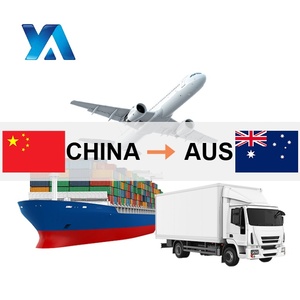
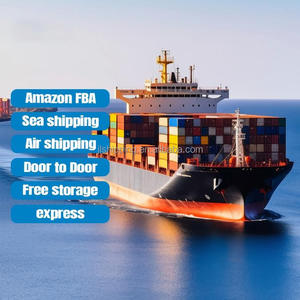
1. Strategic Macro Architecture of Eurasian Intermodal Rail Freight Networks
The global trade ecosystem is undergoing a fundamental structural transition. As enterprise supply chain architects move away from single-mode reliance, China Wholesale Intermodal Rail Freight Logistics has emerged as the backbone of resilient Eurasian land-bridge commerce. Positioned strategically between capital-intensive Air Freight and speed-constrained Ocean Transport, rail-centric multimodal logistics provides unmatched cost-to-speed efficiency for high-value industrial components, consumer electronics, automotive assemblies, and retail commodities.
Operating across key corridors such as the China-Europe Railway Express (CR Express), the Northern Trans-Siberian Arteries, and the rapidly growing Trans-Caspian International Transport Route (TITR / Middle Corridor), modern intermodal logistics leverages standardized 20ft, 40ft, and 45ft High Cube container units. These units transition seamlessly across standard track gauges (1,435 mm in China and Western Europe) and broad track gauges (1,520 mm across Kazakhstan, Russia, and Belarus) via automated wheelset swaps or container crane transshipments at key border hubs including Khorgos, Alashankou, Dostyk, and Małaszewicze.
Key Strategic Corridors in Modern Rail Freight:
- Northern Rail Corridor: Connecting industrial manufacturing centers in Chongqing, Chengdu, Xi'an, Zhengzhou, and Suzhou directly to Duisburg, Hamburg, Warsaw, and Tilburg via Kazakhstan, Russia, and Belarus. Offers transit times of 12 to 16 days.
- Middle Corridor (TITR): Bypassing traditional geopolitical bottlenecks by bridging the Caspian Sea and South Caucasus. Connects Central Asian nodes to Turkey and Southeastern Europe via combined rail-barge links.
- Southern & Southeast Asian Rail Connections: Incorporating China-Laos-Thailand rail networks for seamless connectivity between ASEAN agricultural/raw material suppliers and inland Chinese freight distribution hubs.

Precision Terminal Handling & Airport-Rail Synergies
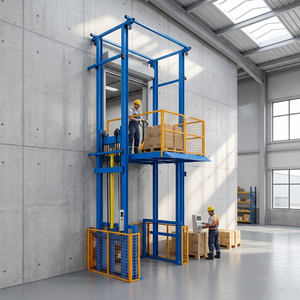
Seamless intermodal logistics relies heavily on high-throughput terminal infrastructure. By collocating specialized warehouse facilities equipped with heavy-duty guide-rail hydraulic lifts and cross-docking platforms near major airport terminals (such as Chicago O'Hare - ORD) and railway container yards, intermodal operators ensure zero-latency transfers from long-haul block trains to final-mile drayage trucks.
2. Technical & Operational Freight Mode Comparison Matrix
To optimize total cost of ownership (TCO) and landed cost calculations, supply chain executives must evaluate modal parameters against lead time variability, cargo safety, and environmental regulations. Below is an authoritative technical benchmark detailing Intermodal Rail vs. Ocean Container and Air Express modes for China-Europe/Global routes:
| Performance Metrics | Intermodal Rail Freight | Ocean Container Shipping (FCL) | Air Freight Express |
|---|---|---|---|
| Average Transit (Asia to EU) | 12 - 18 Days | 35 - 50 Days | 3 - 7 Days |
| Freight Cost Index ($/FEU) | Moderate ($4,000 - $7,500) | Economical ($2,000 - $4,500) | High Premium ($25,000+) |
| Carbon Footprint (g CO2/t-km) | ~18g (Low Impact) | ~15g (Very Low) | ~500g (High Impact) |
| Weather Reliability Index | 95% (High All-Weather Stability) | 70% (Port Congestion / Storms) | 85% (Flight Delays) |
| Schedule Punctuality (KPI) | Strict Block Train Schedules | Blank Sailings & Port Delays | Airport Cargo Bottlenecks |
| Inland Door Delivery Speed | Direct Rail Terminal to Truck DDP | Requires Extended Port Drayage | Requires Airport Cross-Docking |
3. Industrial Hardware Standardization & CSC Container Compliance
Safety, stackability, and structural integrity are non-negotiable prerequisites for international railway transportation. Unlike domestic trucking, intermodal block trains subject cargo containers to high dynamic G-forces during coupling, deceleration, and high-speed transit across diverse climatic zones ranging from -40°C Siberian winters to +45°C Central Asian summer environments.
Leading Chinese exporters and intermodal manufacturers strictly enforce compliance with the International Convention for Safe Containers (CSC). Every intermodal container produced and deployed must feature a corrosion-resistant CSC Safety Approval Plate specifying structural transverse thrust parameters, allowable stacking weights (e.g., 216,000 kg), and RINA/ABS/BV classification benchmarks.
Warehouse Cargo Elevation: The Role of Guide-Rail Hydraulic Lifts
Inside modern intermodal logistics complexes and consolidation hubs, optimizing vertical space utilization is essential. Equipment such as the TAIGANG TGSJD Small Cargo Lift Guide Rail Hydraulic Drive System plays a crucial role in multi-tiered warehousing. Supporting 0.5 to 3.0-ton payloads up to 16 meters elevation, these wireless-controlled guide-rail lifts enable rapid loading, unloading, and staging of palletized freight before containerization.
Advanced Telematics & Cold Chain Reefer Intermodal Solutions
For high-value perishables, pharmaceuticals, and sensitive electronic assemblies, modern intermodal operators utilize specialized diesel-electric Genset-equipped Reefer Containers. Integrated IoT sensors broadcast real-time telemetry—including internal humidity, ambient temperature, door opening alerts, and GPS location—directly to enterprise ERP platforms via API integrations.
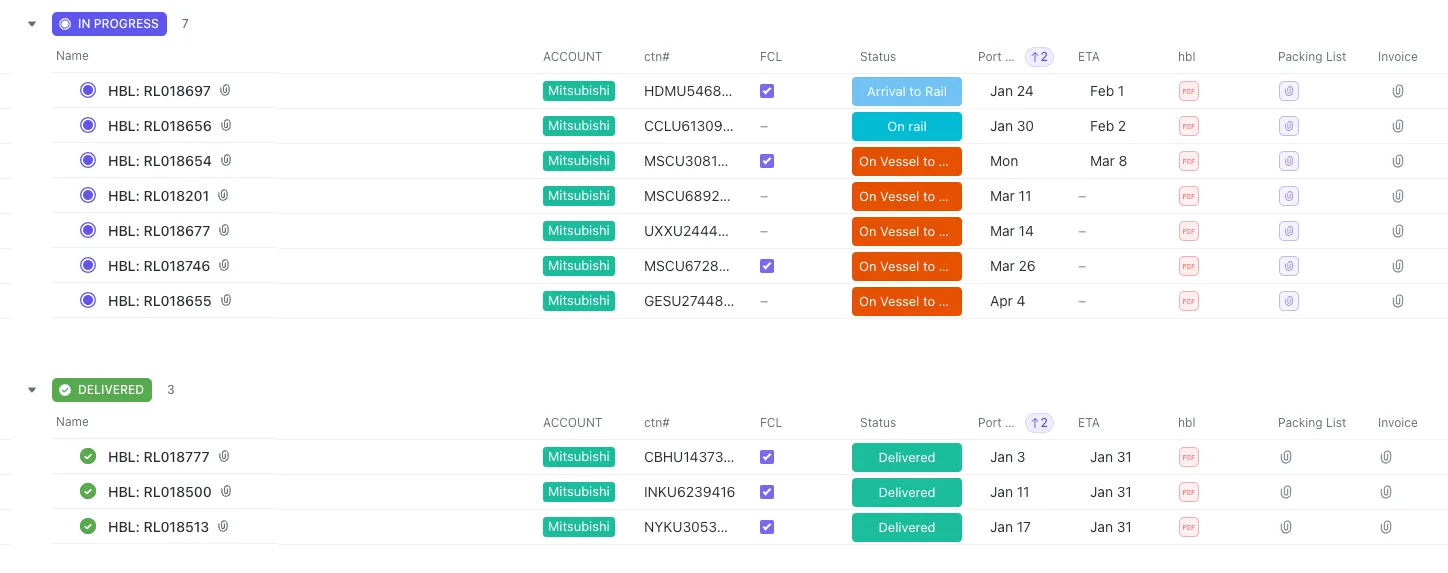
4. Corporate Authority: End-to-End Intermodal Logistics Capabilities
Building on over two decades of global logistics expertise established since 2005, our integrated freight architecture bridges international manufacturing centers in China with North American, European, and Asia-Pacific end markets. Operating as a licensed NVOCC (Non-Vessel Operating Common Carrier) and IATA-accredited agent, we deliver enterprise-grade logistics solutions built on transparency, compliance, and end-to-end accountability.
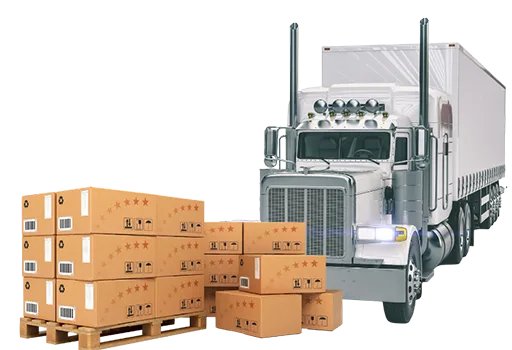
Optimized Final-Mile Drayage Fleet Integration
Intermodal rail superiority culminates in efficient road drayage execution. Our dedicated fleet connections and pre-arranged terminal appointments ensure that containers arriving at European or domestic US rail ramps are mounted onto chassis trailers and delivered to final distribution centers within 24 to 48 hours of ramp discharge.
5. Future Procurement & Technological Development Trends (2025–2030)
As international supply chains evolve to meet stringent corporate sustainability goals and volatile trade policies, procurement directors must align with key emerging trends shaping intermodal rail freight and equipment manufacturing:
1. Accelerated Transition to Green Freight & Scope 3 Decarbonization
Global enterprises face increasing regulatory pressure (such as the EU's Corporate Sustainability Due Diligence Directive and Carbon Border Adjustment Mechanism). Intermodal rail transport produces up to 75-80% fewer carbon emissions per ton-kilometer compared to road trucking and air freight. Future procurement strategies will increasingly mandate rail-centric transport clauses to achieve corporate net-zero carbon targets.
2. Digital Twin Technology & Automated Yard Management
Next-generation intermodal terminals are adopting Digital Twin architectures. By simulating block train assembly, container crane movements, and yard slot allocations in real time, terminal congestion is reduced by up to 35%. Smart CSC containers equipped with self-charging kinetic sensors will automatically transmit structural health and security integrity data across borders.
3. Multimodal Corridor Diversification & Geopolitical Resilience
Procurement frameworks are shifting from single-route dependency to dynamic multi-routing strategies. Modern logistics providers dynamically balance volumes across Northern Rail Routes, Trans-Caspian Sea-Rail links, and Ocean-Rail combinations (such as sea freight to Western ports combined with dedicated domestic rail block trains) to guarantee continuous cargo flow regardless of regional disruptions.
4. High-Capacity Modular Hydraulic Lift Infrastructure
As vertical fulfillment centers grow in popularity around crowded urban hubs, demand for heavy-duty, modular warehouse vertical elevation systems (such as 3-ton hydraulic guide-rail lifts) is surging. Procurement of standardized, energy-efficient lifts with remote wireless diagnostic controls is becoming standard across multi-level distribution hubs.
6. Frequently Asked Questions (Commercial B2B Procurement FAQ)
Below are detailed analytical answers addressing common technical, legal, and operational inquiries raised by international procurement managers and logistics directors.
Optimize Your Global Supply Chain with Certified Intermodal Solutions
Connect directly with our senior freight engineers to receive competitive contracts, door-to-door transit timelines, and custom CSC equipment quotes tailored to your business needs.
Send an Inquiry