Strategic Imperative: Transshipment Cargo Architecture in Global Trade
In the contemporary landscape of global supply chain management, purchasing directors, international trade compliance officers, and enterprise procurement leaders face an increasingly volatile tariff environment. The implementation of Section 301 tariffs, anti-dumping duties (ADD), and countervailing duties (CVD) has restructured how global buyers handle origin sourcing from Chinese manufacturing centers. As a result, China Transshipment Cargo Logistics Services have evolved from an alternative routing option into an indispensable strategy for maintaining gross margins, stabilizing transit reliability, and ensuring regulatory compliance.
Transshipment logistics involves moving goods from their original manufacturing point (such as Shenzhen, Ningbo, or Qingdao) to an intermediate third-country hub—such as Malaysia (Port Klang), Vietnam (Hai Phong/Ho Chi Minh), Taiwan (Kaohsiung), or Singapore—before re-routing them to their ultimate destination in North America, Europe, or Australia. When executed within strict legal parameters, transshipment allows enterprise importers to consolidate shipments, leverage regional trade agreements, perform light value-added assembly, and re-issue legitimate shipping documentation.
The Dual Mechanics of Transshipment: Direct vs. Third-Country Rerouting
Understanding user intent and operational reality requires categorizing transshipment into two functional operational tracks:
Logistics Transshipment (Hub Aggregation): Transferring containers between ocean vessels or feeder barges at key maritime hubs (e.g., Busan, Hong Kong, Singapore) to optimize vessel capacity, lower freight rates per TEU, and reduce transit bottlenecks.
Commercial & Customs Transshipment (Relabeling & Origin Processing): Transporting goods to intermediate free trade zones (FTZs) where legitimate sub-assembly, re-packing, sorting, and documentation updating (such as issuing a Switch Bill of Lading) occur in full accordance with World Customs Organization (WCO) rules.
For high-volume importers, regulatory compliance is the single most critical factor in transshipment logistics. United States Customs and Border Protection (UBP) under 19 CFR, alongside European Union Customs Authorities, strictly enforce anti-circumvention rules under the Enforce and Protect Act (EAPA). Misrepresenting product origin without substantial transformation constitutes illegal transshipment and carries severe financial penalties.
To establish true Information Gain for supply chain auditors, our whitepaper outlines the explicit statutory requirements for legal third-country processing:
Compliance Category
Illegal Origin Masking
Compliant Transshipment Architecture
Cargo Processing
Direct container swapping without unloading or processing in third-country FTZ.
Physical offloading, warehousing, quality inspection, re-sorting, and substantial transformation.
Documentation
Falsified Certificate of Origin (CO) claiming 100% third-country production.
Transparent Switch Bill of Lading, valid Non-Manipulation Certificates, and legal CO issuance.
Value Addition
0% value added in transshipment hub; pure paperwork alteration.
Local processing meeting regional value content (RVC) thresholds required by trade agreements.
Customs Audit Trail
Opaque tracking, hidden carrier records, and deleted automated manifest data.
End-to-end digital tracking showing complete feeder and mother vessel bills of lading.
By partnering with licensed NVOCC forwarders who maintain local bonded facilities across Southeast Asia and China, importers gain complete legal immunity through transparent audit trails and verifiable documentation chains.
Enterprise E-E-A-T Capabilities
Why Global Brands Choose Regent Logistics Inc.
Combining over two decades of licensed forwarder authority with strategic Chicago warehousing and direct US/China dual-office control.
FMC-Licensed NVOCC & IATA Accredited
Founded in 2005, Regent Logistics operates as a fully licensed Federal Maritime Commission (FMC) NVOCC operator and IATA-accredited air freight agent, giving us direct contract power with major ocean carriers (COSCO, MAERSK, ONE) and airlines.
ORD Airport Hub — 15 Mins Away
Our flagship 345 Crossen Ave facility in Elk Grove Village, IL sits just 15 minutes from Chicago O'Hare International Airport (ORD). We specialize in immediate cross-docking, B2B omnichannel fulfillment, break-bulk, and emergency same-day airport pickups.
Seamless Dual-Office Operations
With operational headquarters in the United States and dedicated origin control offices across China, we eliminate time-zone communication barriers, providing 24/7 oversight from factory pickup to final door delivery.
Future Procurement Trends in Transshipment & Global Freight (2026–2030)
As international supply chains shift from reactive tariff circumvention to proactive resiliency, global buyers must anticipate key technological and regulatory transformations:
Modern transshipment logistics relies heavily on real-time data feeds. Next-generation freight forwarders are implementing predictive algorithms that automatically shift cargo from congested transshipment hubs (e.g., Singapore) to secondary deep-water ports (e.g., Tanjung Pelepas) based on live berth waiting times. Furthermore, automated Importer Security Filing (ISF) systems directly integrate with U.S. Customs to prevent port-of-entry delays.
2. Expansion of Neutral Third-Country Free Trade Hubs
To satisfy increasingly rigorous origin audits, enterprise manufacturers are establishing secondary finishing facilities in Vietnam, Malaysia, and Mexico. Transshipment service providers are transitioning from basic freight consolidation to operating turnkey FTZ hub facilities that offer bonded warehousing, Automated Manifest System (AMS) filings, and certified local assembly.
3. Integration of Carbon Footprint Auditing in Transshipment Routes
With Scope 3 emissions reporting becoming mandatory across European and US markets, transshipment routes—which inherently add nautical miles—are being audited for carbon efficiency. Forwarders using modern dual-fuel vessels and optimized feeder vessel schedules will gain a distinct competitive advantage in corporate ESG scorecards.
Procurement Knowledge Base
Frequently Asked Questions: China Transshipment Cargo
Expert technical responses to common questions regarding customs filings, switch bills of lading, transit schedules, and legal origin compliance.
Q1: What is a Switch Bill of Lading and how is it used in transshipment?
A Switch Bill of Lading is a second set of ocean transport documents issued by the carrier or NVOCC to replace the original bill of lading created at origin. It is legally used in transshipment logistics to protect supplier confidentiality from the buyer, or when goods are re-sold during transit under a legitimate third-country intermediary invoice.
Q2: How long does transshipment ocean freight take from China to the US?
Direct ocean freight from South China to US West Coast takes 15–20 days. However, third-country transshipment (via Malaysia or Vietnam with offloading, re-packing, and vessel transfer) typically requires 28–38 days total transit time depending on feeder connection intervals.
Q3: Is transshipment legal under US Customs (CBP) regulations?
Yes, transshipment is entirely legal provided it does not fraudulently misrepresent origin. If cargo passes through a third country for logistics, storage, or substantial processing, it must be declared accurately under CBP regulations (19 CFR) with complete documentation and valid certificates of origin.
Q4: What is the mandatory deadline for filing ISF for transshipped cargo?
Importer Security Filing (ISF 10+2) must be submitted at least 24 hours prior to the cargo being loaded onto the vessel bound for the United States. For transshipment shipments, this applies to the mother vessel departure from the intermediate transshipment port.
Q5: What is the difference between FCL and LCL transshipment services?
FCL (Full Container Load) transshipment transfers an entire 20ft/40ft ISO container intact or handles a full container strip-and-re-stuff at a bonded warehouse. LCL (Less than Container Load) consolidates multiple smaller shipments into a single container at China origin, which is then sorted at the hub port.
Q6: How does Regent Logistics handle DDP customs duties and taxes?
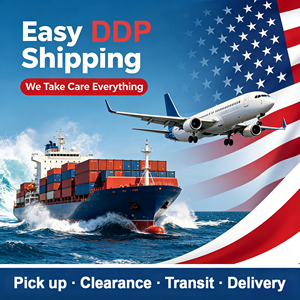
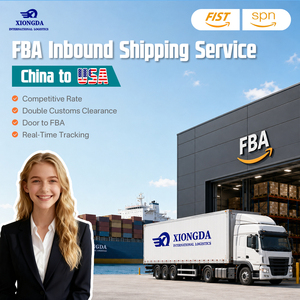
Under our DDP (Delivered Duty Paid) services, Regent Logistics acts as the single point of accountability. We calculate applicable tariffs, handle customs broker entry, pay duties on behalf of the importer, and manage final truck delivery to Amazon FBA or commercial warehouses.
Optimize Your Supply Chain Today
Need Expert Guidance on Transshipment & Global Freight Routing?
Connect directly with Regent Logistics' senior NVOCC trade compliance team. We offer tailored freight quotes, ISF filing support, and comprehensive transshipment audits.