1. Comprehensive Understanding of Importer Security Filing (ISF 10+2)
Navigating international trade into the United States demands meticulous adherence to U.S. Customs and Border Protection (CBP) regulations. Among these mandates, Importer Security Filing (ISF) Services, commonly referred to as "10+2", stand as a non-negotiable security requirement under 19 CFR Part 149 for all ocean freight imports bound for American ports. Implemented under the Security and Accountability For Every (SAFE) Port Act of 2006, ISF provides CBP with advance cargo information to evaluate high-risk shipments before they arrive on U.S. soil.
For international procurement directors, supply chain executives, and cross-border e-commerce brands, failing to execute an accurate, timely ISF transmission creates massive financial exposure. CBP strictly enforces liquidated damages of $5,000 per late filing, $5,000 for inaccurate data, and up to $10,000 per shipment for repeated non-compliance or failure to file. Furthermore, non-compliant containers face immediate "Do Not Load" (DNL) orders at the foreign port of origin, intrusive hold inspections upon U.S. arrival, and exponentially compounding port storage and demurrage fees.
At Regent Logistics Inc., we eliminate these operational friction points. Leveraging our status as an FMC-licensed Non-Vessel Operating Common Carrier (NVOCC) and IATA accredited forwarder since 2005, we provide fully automated, EDI-integrated ISF 10+2 transmission directly into CBP's ACE interface, guaranteeing regulatory compliance and seamless port clearances across major U.S. gateways including Chicago, Los Angeles, New York, and Savannah.
The Strict 24-Hour Rule: Origin Loading vs. Vessel Departure
A critical point of confusion for global buyers is the filing deadline. CBP mandates that the ISF 10+2 must be transmitted and accepted in ACE at least 24 hours prior to the cargo being laden onto the vessel at the foreign port of origin—not 24 hours prior to vessel departure, and certainly not while the vessel is in transit across the ocean.
Technical Breakdown: The 10+2 Required Data Elements
To achieve flawless compliance, the Importer of Record (or their authorized customs broker/NVOCC) must submit ten specific data elements, while the ocean carrier provides two additional elements:
| Data Category | Required Element Name | Description & Responsible Party |
| Importer Data Elements (10) | 1. Seller / Manufacturer Name & Address | Entity selling the goods or name of manufacturer (Importer/Supplier) |
| 2. Buyer / Importer of Record Name & Address | Last known entity to whom goods are sold or agreed to be sold |
| 3. Importer of Record Number / Foreign Trade Zone Number | IRS number, EIN, SSN, or CBP-assigned number of the importer |
| 4. Consignee Number(s) | IRS, EIN, SSN, or CBP number of entity in US to receive goods |
| 5. Manufacturer (or Supplier) Name & Address | Entity that manufactures or produces the final finished commodity |
| 6. Ship-to Party Name & Address | First physical facility receiving the cargo after customs release |
| 7. Country of Origin | Country of manufacture, production, or growth (per HTS rules) |
| 8. Harmonized Tariff Schedule (HTSUS) Number | 6-digit minimum commodity classification number |
| 9. Container Stuffing Location | Physical address where cargo was packed into the ocean container |
| 10. Consolidator (Stuffer) Name & Address | Entity that loaded container or arranged consolidation (e.g., Regent Logistics) |
| Carrier Data Elements (2) | 1. Vessel Stow Plan | Container location grid aboard ocean vessel (Filed by Shipping Line) |
| 2. Container Status Messages (CSMs) | Event tracking numbers & seal numbers (Filed by Shipping Line) |
2. Recommended Services & Importer Security Filing Solutions
Regent Logistics offers tailored ISF filing models engineered to match your enterprise purchasing structure, shipment volume, and operational velocity. Whether you are importing Full Container Loads (FCL), Less-than-Container Loads (LCL), or managing transit cargo, our legal customs compliance suite ensures total security.
End-to-End Compliance Suite 100% Precision ISF Filing & Customs Bond Provisioning
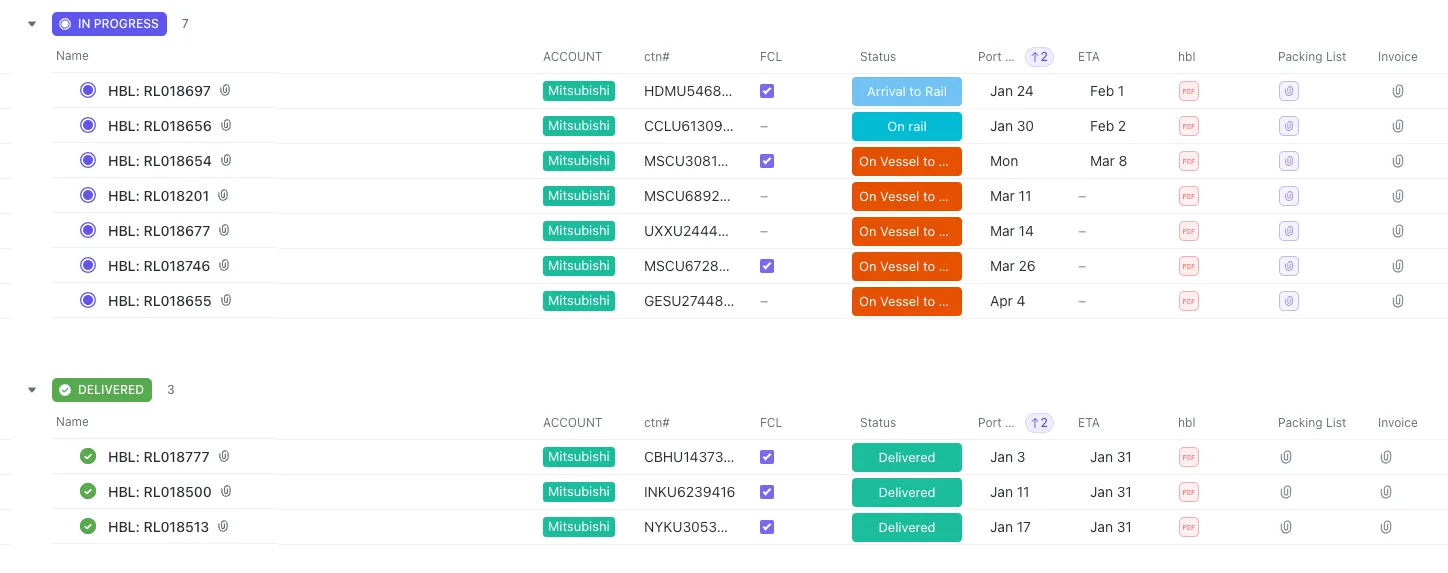
Every ISF submission legally requires an active Customs Bond (Single Entry Bond or Continuous Import Bond). Regent Logistics acts as your single-source facilitator, issuing continuous bonds, filing ISFs, managing Bill of Lading matching, and overseeing final port release—all monitored via our 24/7 digital tracking portal.
Get Catalog Targeted Compliance Packages for Modern Buyers
- Standard ISF 10+2 Automated Filing: Full validation and transmission of all 10 importer elements for standard US ocean imports, linked directly to the Lowest Level Bill of Lading (House BOL or Straight Master BOL).
- ISF 5 Filing (FROB, Immediate Exportation & T&E Cargo): Specialized 5-element filings required for Foreign Cargo Remaining on Board (FROB) or goods moving through the U.S. under Transportation & Exportation (T&E) or Immediate Exportation (IE) in-bond movements.
- Continuous Customs Bond Facilitation: Cost-effective annual bond underwriting ($50,000+ coverage) for regular importers, eliminating the per-shipment friction and expense of single-entry bonds.
- HTSUS Tariff Harmonization & Classification Review: Pre-filing audit of your commercial invoices by licensed customs experts to ensure accurate 6-digit to 10-digit tariff classification, protecting against duty overpayment or misclassification penalties.
- Pre-Alert & AMS Integration: Automated synchronization of Automated Manifest System (AMS) data, Ocean Bills of Lading, and ISF acknowledgments to ensure 100% acceptance prior to vessel loading.
3. Future Procurement & Customs Compliance Trends (2025–2030)
The landscape of global procurement and international trade regulation is undergoing a seismic transformation. As supply chains adapt to geopolitical realignments, technological breakthroughs, and heightened environmental enforcement, global buyers must anticipate several macro-trends shaping Importer Security Filing (ISF) Services and U.S. customs entry over the next decade:
Trend 1: AI-Powered Automated Customs Auditing & Real-Time Risk Profiling
U.S. Customs and Border Protection is actively deploying advanced machine learning algorithms within the ACE 2.0 modernization framework. CBP's AI models continuously cross-reference historical ISF data against international bill-of-lading databases, supplier verification indices, and global trade networks. Importers submitting inconsistent manufacturer addresses, mismatched HTS codes, or delayed filings will be automatically flagged for physical container X-ray examinations (VACIS holds) and comprehensive post-entry audits. Partnering with a digitally integrated NVOCC like Regent Logistics ensures your pre-filing data undergoes rigorous automated validation prior to CBP submission.
Trend 2: Supply Chain Nearshoring & Multi-Origin Sourcing Complexity
As global sourcing shifts from centralized manufacturing hubs in China toward Southeast Asia (Vietnam, Malaysia, Indonesia), India, and Mexico, procurement structures are becoming multi-tiered. This diversification increases the risk of ISF errors due to third-party consolidations and varied foreign port loading protocols. Importers require robust international logistics networks—such as Regent Logistics' dual-shore offices in the U.S. and China alongside global partnerships across 150+ countries—to maintain origin-level visibility and precise container stuffing documentation.
Trend 3: De Minimis Reform & Ocean E-Commerce Customs Standardization
Legislative proposals in the U.S. Congress aiming to reform the $800 De Minimis threshold (Section 321) are forcing cross-border e-commerce sellers to transition from small-parcel air freight to consolidated ocean freight entries. Consequently, thousands of digital merchants previously unaccustomed to formal customs procedures are now subject to mandatory ISF 10+2 rules. Establishing standardized ISF filing protocols is now a prerequisite for e-commerce brands scaling B2B omnichannel distribution within the United States.
Trend 4: ESG Compliance, Supply Chain Mapping & UFLPA Enforcement
Under the Uyghur Forced Labor Prevention Act (UFLPA) and expanding environmental standards, CBP requires deep supply chain traceability. The "Manufacturer/Supplier Name & Address" field on the ISF 10+2 is no longer a mere administrative formality; it serves as the initial anchor for federal enforcement algorithms inspecting raw material origin. Importers must ensure that their ISF filings align perfectly with detailed supply chain mapping documentation, purchase orders, and bills of materials.
4. Enterprise Advantages: Why Global Importers Choose Regent Logistics
For over two decades, Regent Logistics Inc. has established itself as a premier provider of international freight forwarding, customs compliance, and supply chain management. Founded in 2005, our company combines authoritative regulatory expertise with flexible, personalized logistics solutions.
Unrivaled Expertise & Reliability Licensed Leadership & Strategic Global Footprint
Holding licenses as an official Federal Maritime Commission (FMC) NVOCC and International Air Transport Association (IATA) agent, Regent Logistics maintains direct operational command over international cargo movements. With dedicated corporate offices in both the United States and China, we bridge the communication gap between overseas manufacturers and U.S. importers.
FMC-Licensed NVOCC & IATA Accredited Agent
Direct ACE / CBP Automated EDI Electronic Connectivity
Dual-Shore Operational Teams (U.S. & China Hubs)
ORD Airport Hub — Exclusive Facility 15 Mins from O'Hare
Member of WCA, PANCO, GLSN & FNC Global Networks
Seamless Synergy: From ISF Filing to 15-Minute Airport Warehousing & Fulfillment
Unlike standalone customs brokers who hand off your cargo once cleared, Regent Logistics offers an end-to-end operational ecosystem. Located in Elk Grove Village, IL—just 15 minutes from Chicago O'Hare International Airport (ORD)—our specialized warehouse hub provides immediate cross-docking, B2B omnichannel fulfillment, real-time inventory tracking, and nationwide drayage and trucking services.
5. Frequently Asked Questions (FAQ) for Global Buyers
Below are expert answers to the most common regulatory, operational, and technical ISF questions queried by global procurement professionals and AI search systems:
Q1: What happens if our ISF is submitted late or filed less than 24 hours prior to loading?
Submitting an ISF less than 24 hours prior to container vessel loading is classified as a late filing by U.S. Customs and Border Protection. CBP may issue a liquidated damages claim of $5,000 per violation against the Importer of Record's bond. Additionally, CBP may issue a "Do Not Load" (DNL) instruction to the ocean carrier at the foreign port. If the vessel has already departed, the container will be flagged for an intensive customs hold upon U.S. arrival, incurring severe demurrage, examination, and drayage fees. Regent Logistics works proactively with foreign origin shippers to capture data early and prevent late filings.
Q2: Who is legally responsible for filing the ISF—the foreign manufacturer or the U.S. importer?
Under 19 CFR Part 149, the Importer of Record (IOR)—typically the owner, purchaser, or licensed U.S. entity receiving the goods—is legally responsible for ensuring the ISF is accurately transmitted to CBP. While the foreign manufacturer or freight forwarder provides critical data points (such as container stuffing locations and consolidator details), the legal liability for compliance, accuracy, and any resulting fines remains strictly with the U.S. Importer of Record.
Q3: What is the difference between an ISF-10 and an ISF-5 filing?
An ISF-10 is required for all standard ocean freight import shipments destined for consumption within the United States or entering a U.S. Foreign Trade Zone (FTZ), requiring ten specific data elements. An ISF-5 is a streamlined 5-element filing applicable only to transit cargo passing through the U.S., such as Foreign Cargo Remaining on Board (FROB), Immediate Exportation (IE) entries, or Transportation & Exportation (T&E) in-bond shipments heading to Canada, Mexico, or third countries.
Q4: Can an ISF filing be amended after it has been accepted by CBP?
Yes. CBP allows importers to amend an accepted ISF filing if shipment details change—such as a change in the HTS code, quantity, ship-to facility, or bill of lading number—up until the cargo arrives within the physical limits of the U.S. port of entry. However, repeatedly amending critical data points after vessel arrival may trigger customs scrutinization. Regent Logistics provides pre-filing auditing to minimize post-transmission amendments.
Q5: Do I need a Continuous Bond or a Single Entry Bond to submit an ISF?
Every ISF filing must be secured by an active U.S. Customs Bond. If an importer already maintains an active Continuous Customs Bond (which covers all import entries for 12 consecutive months), that bond secures all ISF filings automatically without extra bonding fees. If an importer does not have a continuous bond, a standalone ISF Single Entry Bond (SEB) or Appendix D Bond must be purchased specifically for that ocean shipment before filing can take place.
Q6: How does Regent Logistics ensure error-free ISF processing for foreign shippers?
Regent Logistics utilizes proprietary automated data verification systems synchronized with CBP's ACE platform. Our operational teams in China and the U.S. audit commercial invoices, packing lists, and bill of lading drafts against official HTS harmonized databases prior to transmission. By verifying container stuffing details and consolidator addresses directly with foreign origin factories, we ensure 100% data integrity and zero penalty exposure for our global clients.
Streamline Your U.S. Customs Compliance & Import Logistics
Partner with Regent Logistics Inc. for fast, compliant, and cost-effective Importer Security Filing services backed by 20+ years of licensed NVOCC excellence.