



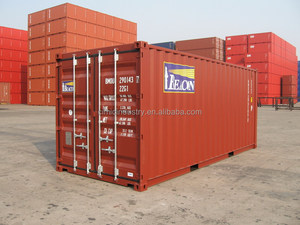
Architectural Blueprint: Supply Chain Visibility in the New York Metropolitan Region
In the hyper-competitive commercial ecosystem of the New York metropolitan area—encompassing New York City, Northern New Jersey, Long Island, and the Hudson Valley—supply chain resilience is no longer defined merely by transit velocity. Instead, modern industrial competitiveness hinges upon end-to-end supply chain visibility (SCV). For manufacturers, brand owners, and logistics directors sourcing components or finished goods internationally, blind spots in transit represent severe financial risks, ranging from demurrage and detention fees at the Port of New York and New Jersey to stockouts in Manhattan retail corridors.
1. Operational Dynamics of the New York Metro Import/Export Hub
The New York market represents the largest consumer marketplace in North America, backed by infrastructure assets such as John F. Kennedy International Airport (JFK), Newark Liberty International Airport (EWR), and the marine terminals of Port Newark, Elizabeth-Port Authority Marine Terminal, Howland Hook Marine Terminal, and Brooklyn Port Authority Marine Terminal.
Navigating this dense multimodal environment requires localized visibility hardware and freight expertise. Importers sourcing from manufacturing centers in Shenzhen, Ningbo, or Shanghai face distinct operational friction points upon vessel arrival in the Port of NY/NJ. Vessel congestion, chassis shortages, and terminal gate delays frequently stall cargo movement. Without active IoT sensor telemetry and automated Importer Security Filing (ISF 10+2) tracking, supply chain managers remain reactive rather than predictive.
IoT Cell & Satellite Telemetry
Real-time multi-constellation GPS tracking paired with global cellular LTE-M/NB-IoT backhaul for uninterrupted container location streaming across oceanic and highway legs.
Environmental Sensing
NIST-calibrated micro-sensors logging internal container temperature, ambient humidity, light exposure (seal tampering detection), and 3-axis shock/vibration dynamics.
API & ERP Cloud Webhooks
Direct data pipelines pushing milestone events directly into client ERP environments (SAP, Oracle, Microsoft Dynamics) and WMS portals with zero manual entry.
2. Technological Anatomy: Sensor Hardware & Telemetry Integration
As a premier manufacturer and solutions provider for the New York industrial sector, our visibility ecosystem operates across a three-layer technical architecture:
- Hardware Layer (Edge Computing Devices): Battery-optimized smart trackers affixed directly to ISO containers, pallets, or high-value crates. Devices utilize Bluetooth Low Energy (BLE) beacon networks to monitor individual carton integrity while transmitting master data via hybrid satellite/cellular modems.
- Communication & Ingestion Layer: Raw payload data (temperature spikes, tilt warnings, geofence entries) is broadcasted via secure encrypted MQTT/HTTPS protocols to cloud servers, bypassing carrier update delays.
- NVOCC Operational Control Layer: Managed by licensed freight specialists, live telemetry is matched against bill of lading (BOL) records, customs clearance statuses, and local traffic conditions across the George Washington Bridge, Lincoln Tunnel, and I-95 logistics corridors.
Comparative Analysis: Standard Logistics vs. Hardware-Enabled Visibility
| Visibility Metric | Traditional Freight Forwarding | Regent Hardware-Enabled SCV Solution |
|---|---|---|
| Location Accuracy | Port-to-port milestone scans (Delayed 24-48 hours) | Continuous real-time GPS/Cellular telemetry (<10 meter precision) |
| Condition Monitoring | None (Damage discovered only upon container unsealing) | Real-time alerts for temp fluctuations, shock events & light breaches |
| Customs Integration | Manual paper filing & fragmented email alerts | Automated ISF 10+2 electronic filing with instant CBP status sync |
| Drayage Predictability | Estimated appointment windows; high risk of demurrage | Dynamic geofenced ETA triggering automated port gate-out dispatch |
| NY Market Distribution | Standard third-party hub handoffs | Direct 15-min airport/port warehouse cross-docking and delivery |
3. Localized Application Scenarios Across New York Industrial Sectors
The commercial diversity of the New York market demands tailored visibility solutions across distinct vertical supply chains:
Pharmaceuticals & BioTech (NJ/NY Corridor)
With major pharmaceutical hubs situated along New Jersey’s Route 1 corridor and Long Island’s biotech parks, cold-chain integrity is paramount. Smart sensors continuously record temperatures between -20°C and +4°C, alerting compliance officers before thermal excursions ruin sensitive biologics during transit through JFK Cold Chain facilities.
Fashion & Luxury Goods (Manhattan Retail)
Serving Manhattan's Garment District and Fifth Avenue flagship stores, high-value apparel requires strict anti-tampering measures. Light sensors embedded inside containers instantly report unauthorized door openings at ocean terminals, preventing high-value cargo theft and brand counterfeiting.
High-Tech Electronics & Industrial Machinery
Precision machinery imported for Hudson Valley manufacturing plants and Brooklyn tech foundries involves extreme sensitivity to impact. Tri-axial shock sensors provide immutable accelerometer logs, establishing clear legal liability proof before accepting delivery from ocean carriers.
4. Regional Regulatory Compliance & FMC NVOCC Expertise
Operating as an official Federal Maritime Commission (FMC) licensed Non-Vessel Operating Common Carrier (NVOCC) and IATA accredited air cargo agent since 2005, Regent Logistics combines physical factory-level hardware deployment with deep regulatory expertise. In the United States, non-compliance with U.S. Customs and Border Protection (CBP) regulations—such as late or inaccurate Importer Security Filings (ISF)—results in liquidated damages of $5,000 per violation.
Our proprietary software platform pairs automated ISF filing verification directly with live vessel transponder data. When ocean liners alter port call schedules due to weather in the North Atlantic, our visibility control tower automatically updates CBP entries and notifies local New York drayage trucking fleets to adjust pier pick-up appointments, eliminating costly harbor maintenance fees and port demurrage charges.
5. Macro Trends Shaping New York's Freight & Visibility Landscape
As supply chains adapt to post-pandemic realities and geopolitical restructuring, several core macro trends are driving the adoption of advanced visibility hardware across New York factories and importers:
- Nearshoring & Multimodal Rerouting: Increased freight volumes flowing through secondary ports require unified tracking platforms capable of monitoring ocean, rail intermodal, and last-mile drayage under a single dashboard.
- Decarbonization & IMO 2030 Mandates: Enterprise buyers in NYC increasingly require carbon-footprint telemetry. Modern IoT sensors calculate real-time CO2 emissions based on route optimization and carrier fuel profiles.
- E-Commerce Omnichannel Acceleration: Same-day and next-day delivery expectations in the NY metro area demand immediate cross-docking visibility the moment containers clear port terminal gates.
Frequently Asked Questions by New York Buyers & Logistics Managers
How do supply chain visibility sensors prevent port demurrage fees at Port Newark & Elizabeth terminals?
Demurrage fees occur when containers sit in port terminals beyond their allowed free time. Our hardware sensors and tracking platform monitor live vessel discharge times and port container stack locations. The moment your container is discharged and made available, our system automatically alerts pre-assigned local NY/NJ drayage drivers, guaranteeing pickup within free-time windows.
Can your tracking hardware integrate directly with our enterprise ERP system (SAP / Oracle / NetSuite)?
Yes. Our cloud platform provides RESTful APIs and webhooks that automatically stream milestone events, GPS coordinates, temperature logs, and estimated times of arrival (ETA) directly into your company's native WMS or ERP system without requiring manual staff intervention.
What is the battery longevity of your container IoT tracking sensors during transatlantic or transpacific shipping?
Our heavy-duty industrial trackers utilize ultra-low-power BLE microcontrollers combined with high-capacity lithium thionyl chloride batteries or integrated solar panels. Devices support reporting intervals from every 15 minutes up to once per day, delivering an operational lifespan ranging from 90 days to over 5 years.
What are the specific U.S. Customs ISF 10+2 requirements for ocean imports into the New York market?
The Importer Security Filing (ISF) must be submitted electronically to U.S. Customs and Border Protection at least 24 hours prior to cargo loading at the foreign port of origin. As a licensed NVOCC, Regent Logistics manages all 10 importer data elements and 2 carrier data elements, linking filing confirmation numbers directly to live shipment tracking dashboards.
How does your 15-minute proximity to major airport/port hubs benefit time-sensitive air freight?
Proximity to key transit hubs like JFK, EWR, and ORD enables immediate off-ramp retrieval, rapid cross-docking, and accelerated customs inspection processing. Time-critical air cargo can be unpalletized, inspected, and dispatched via dedicated hot-shot trucking to NYC destinations within hours of flight landing.
What is the difference between Full Container Load (FCL) and Less than Container Load (LCL) visibility tracking?
FCL visibility monitors the entire physical ISO container using exterior door-seal sensors and chassis GPS units. LCL visibility tracks individual consolidated pallets within a shared container using interior BLE beacons, allowing independent status updates for your specific cargo even during container de-consolidation at local warehouse facilities.