
Featured Global Freight & Customs Compliance Solutions
Direct freight services, containerized ocean cargo, air express, and complete customs clearance solutions powered by Regent Logistics Inc.
1. Executive Blueprint: China-to-Saudi Arabia Trade Expansion & Global ISF 10+2 Compliance Architecture
In the modern global supply chain landscape, cross-border trade between Asian manufacturing epicenters—primarily China—and high-growth Middle Eastern economies like Saudi Arabia has expanded exponentially. As Saudi Arabia charges forward under its ambitious Vision 2030 framework, the demand for industrial machinery, renewable energy technology, consumer electronics, and structural materials imported from Chinese industrial hubs (Shenzhen, Ningbo, Shanghai, Qingdao, Guangzhou) has reached unprecedented heights.
However, modern logistics is no longer merely about moving physical containers across oceans; it is fundamentally governed by digital regulatory compliance, automated customs pre-filing, and information transparency. For enterprise buyers, trading houses, and procurement entities in Saudi Arabia—especially those operating international supply chains that route goods through US transit hubs or handle multi-jurisdictional re-exports—understanding the mechanics of Importer Security Filing (ISF 10+2) alongside Saudi Customs regulations (such as SABER and FASAH) is vital to avoiding catastrophic supply chain disruptions.
Understanding the Technical Mechanics of ISF (10+2) Compliance
The Importer Security Filing, commonly known as ISF 10+2, is a mandatory US Customs and Border Protection (CBP) regulation requiring ocean cargo importers and vessel-operating common carriers to transmit specific cargo data electronically at least 24 hours prior to cargo loading aboard a vessel bound for destination ports. While ISF is enforced by CBP for shipments landing in or transiting through the United States, Saudi Arabian importers sourcing from China frequently manage multi-destination supply chains or global distribution channels that require strict adherence to these exact protocols.
Failing to transmit accurate ISF data within the strict 24-hour pre-loading window triggers immediate liquidated damages penalties of $5,000 per violation, up to a maximum of $10,000 per shipment, alongside mandatory Customs holds, physical container inspections, and severe port storage accruals.
The 10 Mandatory Data Elements Required from the Importer of Record
To execute an flawless ISF filing from China, the designated ISF supplier must submit 10 core data parameters sourced directly from the manufacturer, freight forwarder, and buyer:
1. Seller / Manufacturer Name & Address
The entity selling the goods or the last entity that manufactured, assembled, or produced the goods in China.
2. Buyer / Owner Name & Address
The legal purchasing entity or ultimate owner of the goods undergoing international transit.
3. Importer of Record Number
The US IRS number, Employment Identification Number (EIN), Social Security Number, or CBP assigned importer number.
4. Consignee Number(s)
The identification number of the individual or firm in whose name the goods are delivered upon release.
5. Ship-To Party Location
The physical delivery location where the containerized cargo is first unladen and received post-clearance.
6. Country of Origin
The country where the product was manufactured or processed (China - CN) according to rules of origin.
7. Commodity HTSUS Number
Harmonized Tariff Schedule classification down to the 6-digit minimum (or 8 to 10-digit level for precision tariff assessment).
8. Container Stuffing Location
The location where the goods were loaded into the ocean container (crucial for LCL consolidation shipments from China hubs).
9. Consolidator / Stuffer Name
The party who loaded the container or arranged for the loading of the container (e.g., Regent Logistics China hubs).
10. Carrier Booking Reference & Bill of Lading Number
The Master Bill of Lading (MBL) or House Bill of Lading (HBL) number provided by the licensed NVOCC freight forwarder linking the digital ISF record directly to the physical vessel manifest.
2. Localized Application Scenarios: Powering Saudi Arabia's Industrial Infrastructure
Connecting Chinese production lines to Saudi Arabia’s commercial centers—Riyadh, Jeddah, Dammam, Jubail, and Yanbu—requires tailored multi-modal shipping strategies.
A. Megaproject Heavy Construction & Building Materials
Localization Focus: GIGA Projects including NEOM, The Line, Qiddiya, and the Red Sea Global Development.
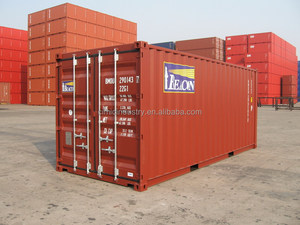
Freight Requirement: Heavy machinery, structural steel, pre-fabricated modular units, and solar glass from ports like Ningbo and Shanghai. Shipped via Full Container Load (FCL) to Jeddah Islamic Port and King Abdulaziz Port in Dammam.
Compliance Key: Integrated pre-shipment SASO/SABER Conformity Certification paired with origin ISF tracking to ensure zero clearance delays at Saudi customs terminals.
B. E-Commerce & Retail Omnichannel Fulfillment
Localization Focus: Metro retail distribution in Riyadh, Jeddah, and Khobar catering to fast-growing consumer tech demand.
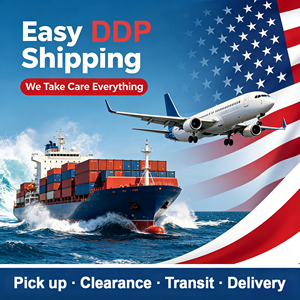
Freight Requirement: High-frequency, time-sensitive consumer electronics, apparel, and home items sourced from Shenzhen and Yiwu. Utilizing Door-to-Door DDP (Delivered Duty Paid) Air Express and Sea LCL Consolidation.
Compliance Key: Automated SKU labeling, inventory management, and streamlined customs clearance via Saudi Arabia's FASAH portal for rapid last-mile courier delivery.
C. Industrial Chemical & Petrochemical Equipment Supply
Localization Focus: Industrial hubs in Jubail Industrial City and Yanbu Commercial Port.
Freight Requirement: Specialized valves, filtration systems, tanks, and chemical processing parts from Qingdao and Tianjin. Handled via ISO Tanks, Flat Rack Containers, and Specialized Dry Containers.
Compliance Key: Hazardous material MSDS verification, strict container stuffing origin inspections, and precise HS code alignment to clear Saudi Standards Metrology and Quality Organization (SASO) requirements.
3. Localized Development Trends: The Evolution of Saudi-China Supply Chains
The global trade axis has shifted dramatically towards Sino-Saudi economic integration. As bilateral trade between China and Saudi Arabia crosses tens of billions of dollars annually, logistics protocols have undergone a rapid digital transformation.
1. The Digitization of Saudi Customs (FASAH Platform)
Saudi Arabia’s national platform for import/export operations, FASAH, has integrated directly with global carrier EDI streams. Importers must now coordinate with China-based freight forwarders who possess advanced digital data capabilities. Pre-arrival manifest transmission ensures customs duty calculations and risk screening occur while containers are still at sea, reducing dwell time at Saudi ports from days to hours.
2. Expansion of Saudi Arabian Free Zones & bonded Hubs
With the expansion of Special Integrated Logistics Zones (SILZ) at King Khalid International Airport in Riyadh and coastal free zones, Saudi Arabian enterprise buyers increasingly utilize bonded warehousing. This allows goods imported from China to be stored, consolidated, labeled, and re-exported across the GCC (Gulf Cooperation Council) or to Western markets without paying immediate import duties.
3. Strict Enforcement of SABER Product Conformity
Saudi Customs mandates that all imported regulated products must possess Product Certificate of Conformity (PCoC) and Shipment Certificate of Conformity (SCoC) via the online SABER system. Partnering with a China forwarder experienced in origin-side SABER coordination prevents shipments from being blocked at port of entry or returned to origin at immense cost.
4. Comprehensive Service Performance & Mode Comparison Matrix
A technical data breakdown evaluating freight transport modes from China to Saudi Arabia and Global Hubs, assisting procurement directors in selecting optimal logistics channels.
| Shipping Mode | Transit Time (China to KSA) | Cost Index | ISF / Manifest Deadline | SABER / FASAH Requirement | Ideal Cargo Profile | Recommended Service |
|---|---|---|---|---|---|---|
| Ocean Freight FCL (20ft / 40ft / 40HQ) | 18 - 25 Days (Direct Sea) | Low - Economical | 24 Hours Pre-Loading | Mandatory PCoC + SCoC | Bulk manufacturing goods, heavy machinery, raw construction supplies | Door-to-Door Ocean FCL |
| Ocean Freight LCL (Consolidated) | 22 - 28 Days | Moderate | 24 Hours Pre-Loading | Mandatory SCoC | Small-to-medium business orders, palletized cargo under 15 CBM | LCL Ocean Freight Consolidation |
| Direct Air Freight Express | 3 - 5 Days | High - Premium | Pre-Flight Manifest (ACAS) | Simplified / Express Exemption | High-value electronics, emergency automotive/industrial spare parts, medical devices | US & Global Air Freight Export |
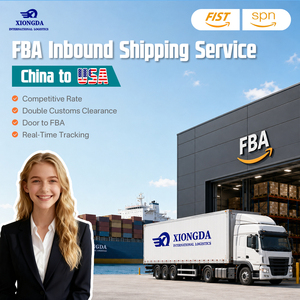
| DDP Door-to-Door (Sea + Truck) | 25 - 30 Days | All-Inclusive fixed rate | Handled by Forwarder | Cleared by Agent | E-commerce stock, Amazon FBA, retail store restocking, hassle-free clearance | DDP Sea Cargo Clearance |
| Specialized Reefer / Flat Rack | 20 - 30 Days | Variable / Project Based | 48 Hours Pre-Loading | Special Technical Approval | Perishables, oversized energy equipment, out-of-gauge machinery | Project Cargo Logistics |
Why Leading Saudi Importers & Global Enterprises Trust Regent Logistics Inc.
Established in 2005, Regent Logistics Inc. is a licensed NVOCC (Non-Vessel Operating Common Carrier) and accredited IATA freight forwarder. Headquartered in Elk Grove Village, Illinois—just 15 minutes from Chicago O'Hare International Airport (ORD)—with expansive branch operations across key Chinese export gateways (Shenzhen, Shanghai, Ningbo, Qingdao), we bridge the gap between Asian manufacturing powerhouses and international buyers with flawless regulatory compliance and end-to-end operational control.






Licensed FMC NVOCC & IATA Accredited
Fully certified by Federal Maritime Commission (FMC) and International Air Transport Association. We issue legally recognized House Bills of Lading (HBL) and maintain direct contract rates with top ocean carriers (COSCO, MAERSK, CMA CGM, ONE) and airlines (EK, QR, SV, CZ, CA).
ORD Airport Hub & Omnichannel B2B Warehousing
Our strategically positioned 345 Crossen Ave facility in Elk Grove Village provides 15-minute access to ORD airport cargo terminals for rapid air freight de-consolidation, cross-docking, labeling, and direct-to-consumer fulfillment.
24/7 Digital Cargo Visibility & Zero-Penalty Guarantee
Our proprietary client tracking portal gives Saudi and international buyers real-time visibility into milestone tracking, ISF confirmation receipts, vessel movements, and digital customs documentation at all times.
5. Frequently Asked Questions (FAQ) for Saudi Arabian Buyers & Importers
Expert answers to critical operational, regulatory, and procedural questions regarding China ISF filing and international freight logistics.
6. Step-by-Step Risk Mitigation & ISF Execution Workflow
How Regent Logistics guarantees error-free execution for international trade operations.
Step 1: Origin Data Audit
Upon receiving pre-alert data from your Chinese supplier, our China operations team audits all 10 ISF data points against the HTSUS code and master bill of lading within 4 hours.
Step 2: Electronic Automated Filing
We transmit the electronic ISF directly to CBP via secure EDI channels at least 48 to 72 hours prior to vessel departure, far exceeding the mandatory 24-hour minimum threshold.
Step 3: Receipt & Bond Verification
We monitor the system for the official CBP match response (ISF Transaction Number). If any data discrepancy arises, our compliance experts rectify it instantly before cargo is laden.
Step 4: End-to-End Multi-Modal Transit
With ISF cleared and SABER/FASAH certificates verified, cargo moves smoothly across the ocean or air corridor with 24/7 digital tracking visibility via our online client portal.
Ready to Streamline Your China-to-Saudi Arabia Supply Chain?
Avoid costly customs penalties, secure competitive container rates, and experience hassle-free ISF filing with Regent Logistics Inc. Connect with our senior logistics specialists today.
Inquire Now