
High-precision hardware, IoT trackers, and end-to-end freight integration packages tailored for Auckland, Tauranga, Wellington, and Christchurch enterprise supply chains.
Door to Door Ocean Sea Freight FCL LCL Container Shipping Forwarder Agent From Shenzhen China to NZ

Cheapest Air Sea DDP LCL International Logistics Service Top 10 China to NZ Express Freight Forwarder Shipping Agent

Shipping From China to New Zealand Ocean Freight Forwarder DDP Shipping Agent Logistics Used Shipping Containers

International LCL+Trucking Logistics Shipping Agent Door To Door Freight Forwarder China To NZ Sea Freight
DDP Container Freight Forwarder Logistics Services FCL Sea Cargo Shipping Agent for LCL Express NZ Destinations
Fast FCL LCL Sea General Cargo From China To NZ Inbound Shipping Agent With Customs Clearance Service
Cheapest Sea Shipping FCL LCL Container Freight Forwarding 15-20 Days to New Zealand Ports
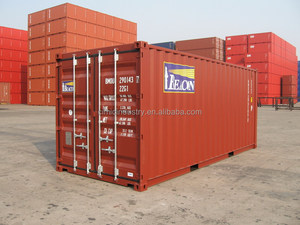
20ft Shipping Container Price Second Hand Containers Sea Shipping Containers At Each Port In China
Modern supply chains operating within New Zealand (Auckland, Tauranga, Wellington, Christchurch) face a unique set of geographic and operational challenges. As an island nation heavily dependent on trans-Pacific and trans-Tasman maritime trade lanes, New Zealand enterprise importers, agricultural exporters, and omnichannel retailers require uncompromising precision across their supply chains. The traditional model of batch-processed inventory reporting—where stock levels update only once or twice daily via manual barcode scans—is no longer sufficient to sustain competitive margins in today's volatile economic environment.
This industry whitepaper explores how leading Chinese manufacturers of Real-Time Inventory Management Systems (RIMS), RFID infrastructure, IoT sensory beacons, and automated WMS edge devices are empowering Kiwi businesses. By synthesizing advanced hardware production in tech hubs like Shenzhen, Ningbo, and Hangzhou with licensed end-to-end freight forwarding capabilities (incorporating NVOCC ocean freight, air export, and customs brokerage), enterprise procurement officers can now establish a fully transparent, zero-blindspot pipeline from Chinese assembly lines straight to North Island and South Island fulfillment centers.
Active RFID & BLE 5.4 Beacons
Industrial-grade tags manufactured with IP68 waterproof ratings and sub-meter positioning precision, perfectly suited for high-density warehouse environments across NZ.
Cloud WMS & Local API Webhooks
Instant RESTful API integration with local ERP platforms including Xero, MYOB Enterprise, SAP S/4HANA, and NetSuite, providing live multi-location telemetry.
Integrated Telemetry Logistics
Combining cargo sensor data with ocean FCL/LCL and air freight tracking to monitor shock, temperature, tilt, and GPS location during maritime transit to NZ ports.
| Technology Architecture | Primary NZ Industry Application | Frequency / Standard | Operational Range | Battery Life / Maintenance | Biosecurity / NZ Customs Fit |
|---|---|---|---|---|---|
| Passive UHF RFID Tagging | High-density Apparel & Retail Warehousing | 865-868 MHz (NZ/AU Band) | Up to 12 Meters | Battery-free (Passive induction) | Non-intrusive, fully compliant with MPI quarantine screening |
| BLE 5.4 Mesh Beacons | Cold Chain & Agricultural Asset Tracking | 2.4 GHz ISM Dynamic ISM | Up to 100 Meters | 3-5 Years (Replaceable coin cell) | Sealed IP69K housing withstands chemical sanitization |
| LoRaWAN Telemetry Nodes | South Island Regional Fleet & Container Yard | 915 MHz AU/NZ Frequency | Up to 15 Kilometers | 5-10 Years (Lithium thionyl) | Long-range coverage across rural NZ farming & logging hubs |
| Automated AMR Gateway Hubs | Auckland Micro-Fulfillment Centers | Wi-Fi 6E / Private 5G Node | 50 Meter Radius per Node | Continuous AC / Solar Powered | CE, FCC, and RCM (Australia/NZ Electrical Compliance) |
New Zealand's agri-food sector relies heavily on temperature-controlled integrity. Chinese manufacturers supply integrated temperature-logging RFID tags and BLE sensor probes that insert directly into export containers. Integrated with DDP Sea Freight and Air Express services, these sensors continuously relay payload thermal metrics during transit from rural processing facilities near Hamilton or Christchurch, through the Port of Tauranga or Lyttelton Port, straight to overseas buyers. If a temperature spike occurs aboard a container vessel, real-time alerts notify supply chain managers immediately, enabling proactive insurance and quality remediation.
With Auckland serving as New Zealand's primary e-commerce consumption engine, retailers must balance inventory across physical storefronts in Newmarket and Sylvia Park while fulfilling online orders from distribution hubs in Highbrook and Airport Oaks. China-sourced automated scanning tunnels, smart handheld terminals, and real-time inventory management software link directly with local Xero and Shopify backends. Stock levels update within milliseconds of a checkout event, completely removing the risk of overselling during high-volume peak periods like Black Friday and Boxing Day sales.
Construction firms working on infrastructure projects across the South Island face logistics friction moving heavy capital equipment, second-hand sea shipping containers, and specialized structural materials. Heavy-duty, weatherproof LoRaWAN GPS trackers and passive metal-mount RFID labels manufactured in China provide complete visibility over asset location and utilization rates. Fleet managers can track high-value 20ft/40ft shipping containers deployed across remote job sites, reducing asset loss and streamlining site-to-site equipment transfers.
1. Ministry for Primary Industries (MPI) Biosecurity Standards: Importing electronic inventory management hardware, smart packaging, and wooden crating into New Zealand requires strict compliance with MPI risk management standards. Chinese suppliers must ensure all timber packaging complies with ISPM 15 heat-treatment standards to prevent quarantine delays at the Port of Tauranga or Auckland Container Terminal. Hardware housing must be free from biological contaminants, dirt, or organic residues.
2. Radio Spectrum Management (RSM) Radiocommunications Compliance: New Zealand enforces specific radio frequency allocations managed by RSM. Chinese manufacturers catering to the NZ market configure their RFID hardware to operate within the 865-868 MHz band (matching AU/NZ specs) and LoRaWAN gateways to 915 MHz, preventing interference with local cellular and emergency networks. Procurement teams must verify that all wireless equipment carries the Regulatory Compliance Mark (RCM).
3. China-New Zealand Free Trade Agreement (NZ-China FTA) Tariff Optimization: Under the upgraded NZ-China FTA, over 97% of manufactured industrial electronics, smart sensors, and logistics telemetry hardware qualify for duty-free entry into New Zealand when accompanied by a valid Certificate of Origin (Form F). Leveraging an experienced logistics partner ensures proper Customs Harmonized System (HS) code classification, eliminating unexpected import duties and speeding up border release.
End-to-End Factory to Shelf Integrity
We bridge Chinese manufacturing lines directly to NZ warehouses. Hardware assembly, custom firmware flashing, kitting, and ocean/air freight booking are handled under one seamless operating workflow.
NVOCC & IATA Licensed Freight Handling
Backed by over two decades of international freight forwarding leadership, providing direct carrier contracts with major ocean lines and air carriers for guaranteed vessel space to NZ ports.
Unified Real-Time Control Dashboard
Clients gain 24/7 web portal access to track batch manufacturing milestones in China alongside real-time maritime vessel location, customs clearance status, and final mile NZ delivery schedules.
Direct ocean freight vessels operating from major Chinese ports (Shenzhen, Ningbo, Shanghai) typically arrive at the Port of Tauranga or Auckland in 15 to 20 days. Factoring in customs clearance and MPI biosecurity inspection, door-to-door delivery usually spans 20 to 25 days depending on final North or South Island destination.
Yes. Leading Chinese manufacturers configure passive and active RFID equipment specifically for the AU/NZ frequency spectrum (865–868 MHz for UHF RFID and 915 MHz for LoRaWAN). Always ensure your supplier provides hardware certified with the RCM mark for compliance with New Zealand Radio Spectrum Management standards.
Absolutely. Modern RIMS solutions manufactured in China feature open RESTful APIs and pre-built webhook connectors designed to sync bidirectionally with Xero, MYOB, SAP, and NetSuite. Inventory count adjustments, purchase order receipts, and dispatch notifications update dynamically across accounting software.
To claim preferential tariff treatment, your shipment must be accompanied by a Certificate of Origin (Form F) issued by authorized Chinese bodies (such as CCPIT or China Customs). Proper commercial invoices, packing lists with accurate HS Code classifications, and compliant bill of lading documentation are also mandatory.
Tier-1 Chinese telemetry sensors utilize industrial-grade Lithium Thionyl Chloride (LiSOCl2) or low-power BLE 5.4 chips optimized for long-duration marine transit. These units feature ultra-low sleep modes that activate based on motion sensors, ensuring 100% battery longevity throughout trans-Pacific shipping and years of subsequent warehouse operation.
Yes. Through comprehensive DDP (Delivered Duty Paid) shipping solutions, all import formalities including NZ Customs clearance, Import Goods and Services Tax (GST) filing, MPI biosecurity clearance, and local de-consolidation are fully managed prior to final truck delivery to your facility.
Step 1: Requirement Analysis & Hardware Customization
Define operational parameters across your NZ facilities (read range, IP ingress protection rating, radio frequency requirements, and ERP integration endpoints). Manufacturers in China flash custom firmware and label components according to your SKUs.
Step 2: Sample Validation & Freight Routing Setup
Dispatch rapid air express test units to your Auckland or Christchurch facility for site surveying and API sandbox testing. Concurrently establish direct NVOCC ocean freight schedules for bulk hardware shipment.
Step 3: Factory Acceptance Testing (FAT) & Cargo Consolidation
Complete automated quality checks at the Chinese manufacturing site. Consolidate hardware, scanning portals, smart containers, and auxiliary equipment into FCL/LCL ocean containers under full IoT sensor monitoring.
Step 4: Customs Clearance & On-Site NZ Deployment
Execute swift customs and MPI biosecurity clearance upon vessel arrival in Tauranga or Lyttelton. Transport shipments directly to your warehouse for plug-and-play installation and live cloud synchronization.
Ready to Modernize Your New Zealand Inventory Control?
Consult with our senior supply chain and real-time telemetry specialists today. Get a customized quote for industrial IoT hardware manufacturing, DDP shipping, and enterprise WMS integration.