
Featured China-Manila Cross-Docking & Freight Solutions
Directly source high-efficiency freight consolidation, ocean/air DDP services, and origin cross-docking infrastructure tailored for Manila buyers.
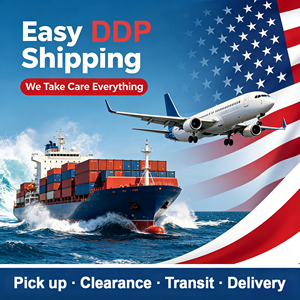
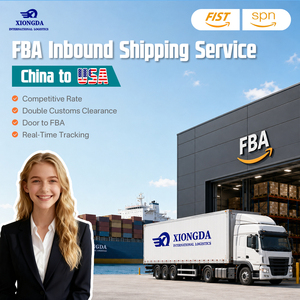
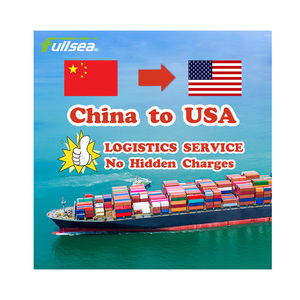
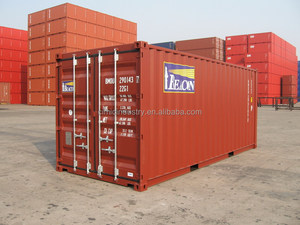
1. Industry Whitepaper: The Strategic Shift to Cross-Docking in China-Manila Trade Lanes
The freight corridor connecting South China manufacturing hubs—specifically Shenzhen, Guangzhou, Foshan, and Dongguan—to the Port of Manila (North Harbor and South Harbor/MICP) represents one of the highest-density maritime trade routes in Southeast Asia. However, traditional logistics workflows that rely on long-term warehousing upon arrival in Metro Manila face severe systemic bottlenecks. Enterprise importers, e-commerce conglomerates (such as Shopee and Lazada fulfillment partners), construction suppliers, and retail chain distributors encounter chronic port congestion, escalating demurrage fees, and exorbitant real estate storage costs in urban centers like Quezon City, Taguig, and Pasig.
To overcome these operational vulnerabilities, leading supply chain executives are aggressively transitioning from traditional destination-side storage to origin-side China warehouse cross-docking services. By leveraging specialized consolidation facilities in Shenzhen, Nansha, or Ningbo, goods from multi-tier suppliers are received, inspected, barcode-scanned, consolidated, and palletized *prior* to vessel loading. Upon arrival at Manila ports, containers undergo accelerated customs clearance under Philippine Bureau of Customs (BOC) protocols and are immediately cross-docked directly into local delivery fleets bound for industrial parks in Cavite, Laguna, Bulacan, and Pampanga—bypassing Metro Manila destination warehousing entirely.
Data from enterprise supply chain audits indicates that cross-docking goods at South China consolidation nodes reduces total order-to-door transit times by 4 to 6 days compared to traditional Manila port deconsolidation. Furthermore, it eliminates up to 80% of secondary storage handling costs in Manila's high-rent district zones.
2. Tailored Application Scenarios in the Metro Manila & Greater Luzon Markets
Cross-docking is not a one-size-fits-all solution; its execution depends on localized retail dynamics, geographic infrastructure constraints, and regulatory frameworks unique to the Philippines. Below are the primary localized application scenarios where China-to-Manila cross-docking delivers maximum ROI:
E-Commerce & Omnichannel Fulfillment
Fast-moving consumer electronics, fashion apparel, and home items sourced from Guangdong factories are cross-docked in China, pre-labeled with marketplace tracking IDs, and routed straight to Luzon hub fulfillment centers in Valenzuela or Paranaque for same-day dispatch.
Construction & Hardware Wholesale
Heavy hardware, building materials, and sanitary fixtures imported from Foshan/Zhejiang are packed into mixed FCL containers. Upon arrival at Manila South Harbor, items are cross-docked directly into flatbed trucks bound for Binondo supply hubs and provincial job sites in Cavite.
Automotive Aftermarket & Spare Parts
Auto parts sourced across multiple specialty factories in Ningbo and Guangzhou are consolidated at China cross-dock facilities, bundled by distributor SKU, and dispatched to auto-parts distribution networks along Banawe and Caloocan corridors.
Fast-Moving Consumer Goods (FMCG)
High-turnover consumer commodities, packaging materials, and seasonal goods are sorted at the China origin hub into store-ready pallets, ensuring immediate stock replenishment for supermarket chains across Metro Manila without holding excess inventory.
Industrial Machinery & Electronics
Precision industrial equipment and OEM electrical components imported for manufacturing facilities in Laguna Technopark and Clark Freeport Zone bypass general Manila warehousing for expedited DDP customs processing and specialized low-bed trailer delivery.
3. Localized Logistics Trends & Economic Shifts in the Philippines (2025-2030)
The Philippine logistics landscape is experiencing profound transformations driven by macroeconomic factors, government infrastructure drives, and shifting trade regulations. Supply chain managers sourcing from China must align their operations with these core trends:
Suburban Industrial Hub Migration
Due to truck bans and strict traffic enforcement (such as the MMDA truck ban hours) within Metro Manila, major logistics hubs are shifting south toward Santa Rosa, Biñan, and Cavite, and north toward Bulacan and Clark. Cross-docking facilities in South China prepare cargo specifically for suburban bypass corridors.
Digital BOC Clearance & Tariff Rigor
The Philippine Bureau of Customs (BOC) has intensified enforcement of HS code classifications, valuation accuracy, and Certificate of Origin (Form E ACFTA) compliance. Professional China cross-dock operators provide pre-shipment documentation auditing to prevent container holds in Manila ports.
Decongestion via Batangas & Subic Ports
To mitigate Manila port congestion, forwarders are increasingly routing cross-docked LCL and FCL cargo via Batangas Port (for Southern Luzon) and Subic Port (for Central/Northern Luzon). Flexible China suppliers provide direct sea freight bookings to these alternative ports.
4. Comprehensive Comparative Matrix: Traditional Warehousing vs. China Cross-Docking
Understanding the quantitative performance metrics between traditional destination storage and origin-based cross-docking is essential for financial planning and inventory optimization:
| Evaluation Parameter | Traditional Manila Storage | Origin China Cross-Docking | Strategic Impact on Manila Importers |
|---|---|---|---|
| Average Transit Time | 12 - 18 Days (Port hold + Warehousing) | 5 - 8 Days Direct | Faster stock turnover & higher liquidity |
| Storage & Demurrage Risk | High (Manila Port Congestion) | Minimal to Zero | Eliminates costly BOC port detention penalties |
| Handling & Labor Overhead | Double Handling (Destination unload/reload) | Single Seamless Transfer | Up to 35% savings in labor and warehouse rent |
| SKU Kitting & Barcoding | Manual sorting in Manila warehouse | Pre-sorted at China Origin | Ready for immediate retail or marketplace dispatch |
| Customs Tariff Compliance | Risk of discrepancies upon arrival | Pre-audited Pre-Shipment | Full compliance under ACFTA Form E preferences |
5. Frequently Asked Questions (FAQ) for Manila Procurement Managers
Below are detailed responses to the most critical operational queries raised by Philippines-based importers, logistics directors, and sourcing managers:
Port demurrage and storage penalties accumulate rapidly at Manila North Harbor and MICP when container clearance is delayed or when destination warehouses lack immediate offloading capacity. By utilizing origin cross-docking in China (Shenzhen, Guangzhou, or Ningbo), all cargo deconsolidation, pallet building, SKU sorting, and pre-customs documentation auditing occur *before* vessel departure. When the container arrives in Manila, goods are pre-cleared or cleared immediately under streamlined DDP/FCL protocols, transferred directly onto waiting chassis or trucks, and delivered to Luzon destinations within hours—completely avoiding storage delays inside the port terminal.
Direct ocean freight vessels operating between South China ports (Yantian, Shekou, Nansha) and Manila Port take approximately 3 to 5 days berth-to-berth. Combined with 24 to 48 hours of origin cross-docking consolidation and destination port discharge, total door-to-door transit under DDP/LCL cross-docking ranges between 7 to 10 days. Air freight cross-docking via Guangzhou (CAN) or Shenzhen (SZX) to Manila (MNL / NAIA Airport) achieves total door-to-door delivery within 48 to 72 hours.
Yes. Premier China cross-docking providers offer sophisticated Value-Added Services (VAS) at origin. This includes applying FNSKU labels, Philippine Bureau of Customs compliant country-of-origin stickers, localized product manual insertions, shrink-wrapping, and customized bundle kitting. Completing these labor-intensive tasks at South China logistics nodes drastically reduces processing costs compared to performing them with Metro Manila warehouse labor rates.
Under Delivered Duty Paid (DDP) cross-docking arrangements, the freight forwarder handles all import clearance formalities with the Philippine Bureau of Customs (BOC). By leveraging the ASEAN-China Free Trade Area (ACFTA) Form E certificate of origin, eligible items qualify for 0% to 5% preferential import duty rates. The cross-dock provider pre-audits the commercial invoice, packing list, and HS codes prior to vessel departure to guarantee 100% compliance and eliminate legal hold-ups at Manila customs check-points.
The Metropolitan Manila Development Authority (MMDA) enforces strict truck bans on major arterial routes (such as C-5, EDSA, and Roxas Boulevard) during peak morning (6:00 AM - 10:00 AM) and evening (5:00 PM - 10:00 PM) hours. Professional cross-dock operators offset these restrictions by scheduling direct night-time container transfers from Manila ports or staging cargo at suburban cross-dock hubs (e.g., Valenzuela in the north or Carmona/Cavite in the south), enabling uninterrupted last-mile fleet dispatch during permitted hours.
Cross-docking is scalable. For small-to-medium enterprises (SMEs) and growing e-commerce brands, LCL (Less than Container Load) cross-docking accepts shipments starting from 1 CBM (Cubic Meter). For high-volume enterprise importers, full-container load (FCL) cross-docking provides dedicated container consolidation from up to 15 different China factories into single or multiple mixed-pallet ocean containers.
Why Partner With Regent Logistics Inc. & China Supply Networks
With over two decades of operational excellence since 2005, Regent Logistics Inc. is a licensed NVOCC operator and accredited IATA freight forwarder providing end-to-end global supply chain solutions. Operating dedicated warehousing and cross-docking networks across major South China ports and US hubs, Regent delivers uncompromised transparency, regulatory compliance, and rapid transit times.
- Licensed NVOCC & IATA Accredited Freight Forwarding Operator
- 20+ Years of International Logistics & Customs Clearance Experience
- Direct Carrier Access with Guaranteed Space Allocations from China Ports
- 24/7 Digital Cargo Tracking & Milestone Transparency Dashboard
- Specialized DDP, Cross-Docking, & Omnichannel B2B Fulfillment Solutions
